Intermittent Fasting and Time-Restricted Eating
Time-restricted eating (TRE) and intermittent fasting (IF) limit food intake windows to promote metabolic switching, autophagy, and improved insulin sensitivity. Common protocols include 16:8 and 18:6. Benefits include fat loss, improved glucose control, and triggered autophagy pathways overlapping with caloric restriction. Concerns include muscle loss during prolonged fasts and potential hormonal effects in women.
Viewpoints
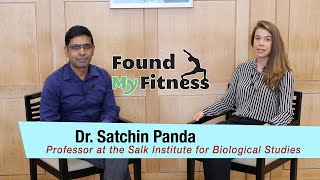
Satchin Panda: Evolutionary Basis for Time-Restricted Feeding
Rhonda Patrick
“Time-restricted feeding recapitulates an evolutionarily ingrained fasting physiology, as hunter-gatherers and wild animals naturally eat only during brief twilight windows, leaving the majority of the day in a fasted state. This daily fasting period is a primordial biological response that supports repair and rejuvenation, and the approach was deliberately framed around 'feeding' rather than 'fasting' or 'caloric restriction' to improve public receptivity. Aligning eating windows with natural activity patterns also synchronizes with circadian biology, reinforcing metabolic health beyond simple caloric reduction.”

Attia: Protein adequacy is a critical flaw in aggressive time-restricted eating
Peter Attia
“Aggressive time-restricted eating protocols (OMAD or 22-24 hour fasts) reliably produce weight loss but create a protein deficiency problem, because the body can only utilize roughly 40-50 grams of amino acids per meal regardless of intake. To preserve muscle mass while using TRE, patients should consume protein snacks outside the primary feeding window, though these must be very low in non-protein calories to preserve the metabolic intent of the protocol.”
Key Moments

Rhonda Patrick: TRE improves metabolic health independent of caloric restriction
Rhonda Patrick
“Time-restricted eating (TRE), typically within a 6–10 hour window, improves metabolic biomarkers including glucose regulation, insulin sensitivity, and blood pressure even without reducing caloric intake. Research by Satchin Panda in shift workers and firefighters demonstrates these benefits, suggesting TRE exerts metabolic effects beyond simple energy restriction.”

Huberman: intermittent fasting as a flexible, multi-benefit practice
Andrew Huberman
“Intermittent fasting is more than a single intervention — it offers benefits for insulin sensitivity and metabolic health and can be practiced flexibly, either by the clock or by feel depending on the day. A key practical guideline is stopping eating at least three hours before bed, which supports both the fasting window and sleep quality. Consistency in the habit matters more than perfect adherence.”
Rhonda Patrick: TRE improves metabolic health independent of caloric restriction
Rhonda Patrick
“Time-restricted eating (TRE), typically an eating window of 6–10 hours, improves metabolic health markers including glucose regulation, insulin sensitivity, and blood pressure even without reducing caloric intake. Research by Satchin Panda in shift workers and firefighters demonstrates these benefits in real- world populations. While people practicing TRE often naturally reduce calories by eliminating snacks or meals, the metabolic improvements occur independently of caloric restriction alone.”
Rhonda Patrick: circadian misalignment worsens glucose regulation and insulin response
Rhonda Patrick
“Circadian misalignment—when sleep and meal timing are shifted out of sync with the body's internal clock, as in jet lag or shift work—leads to a 6% increase in blood glucose, 22% more insulin production, and decreased leptin levels, impairing satiety and postprandial glucose control. Even subclinical elevations in blood glucose within the normal range are associated with greater hippocampal atrophy, underscoring the importance of optimizing metabolic health broadly. These findings support the principle that meal timing relative to circadian rhythms is a critical variable in metabolic outcomes, providing mechanistic rationale for circadian-aligned time- restricted eating.”
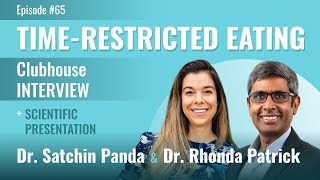
Rhonda Patrick: Introducing time-restricted eating in the context of circadian rhythms
Rhonda Patrick
“Every organ in the body, including metabolic organs like the liver, operates on a circadian rhythm. Time-restricted eating leverages this biological timing by confining food intake to a narrower daily window, which research has shown to confer metabolic benefits beyond those explained by caloric restriction alone.”
Satchin Pande: distinguishing time-restricted eating from intermittent fasting and caloric restriction
Rhonda Patrick
“Time-restricted eating (TRE) is distinct from both caloric restriction and intermittent fasting in that it limits eating to an 8–12 hour window without explicitly reducing calories. Circadian rhythms are a key reason TRE matters, as the body—unlike a machine—is time-dependent in its capacity to repair, rejuvenate, and perform optimally. Eating in alignment with circadian biology leverages these built-in repair cycles rather than working against them.”
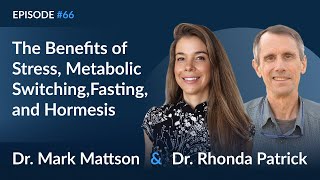
Mattson: Intermittent fasting is an eating pattern, not a diet
Rhonda Patrick
“Intermittent fasting is fundamentally an eating pattern — defined by when you eat — rather than a diet, which concerns what and how much you eat. Fasting creates a mild energetic stress analogous to sustained exercise, and both states elevate ketones that serve signaling functions, including modulating gene expression through deacetylase enzymes. These evolutionarily conserved stressors drive beneficial cellular adaptations.”
Rhonda Patrick: Ketones protect muscle mass during intermittent fasting
Rhonda Patrick
“During intermittent fasting or calorie restriction, the body produces ketones from fatty acids as a water-soluble fuel that crosses the blood-brain barrier, satisfying the brain's glucose demands. This ketone production is a critical safeguard against muscle catabolism: without it, the body would break down skeletal muscle proteins (via gluconeogenic amino acids like alanine) to fuel the brain, leading to rapid muscle wasting. Ketogenic adaptation and ketone elevation thus serve a muscle- preserving function during fasting states.”
Rhonda Patrick: Circadian misalignment between master and peripheral clocks drives metabolic dysregulation
Rhonda Patrick
“Insulin sensitivity declines throughout the day, making evening meals metabolically harmful. Eating late disrupts the synchrony between the light-entrained master clock and peripheral clocks in organs like the liver and pancreas, which respond to food timing—and this desynchronization itself is believed to drive metabolic dysregulation. Satchin Panda's research highlights that the first meal or even a non-water beverage in the morning initiates the peripheral clock, making the timing of food intake a critical regulator of metabolic health.”
Panda & Patrick: timing of eating window affects diet quality through social behavior
Rhonda Patrick
“The timing of the eating window within time-restricted eating matters beyond biology alone — ending an 8–10 hour window at 11 p.m. versus 7 p.m. increases exposure to social eating contexts where alcohol and sugary foods are more commonly consumed. When individuals lack full control over their food environment, a later eating window can undermine diet quality, making earlier window closure a practical advantage for most people.”

Rhonda Patrick: evolving views on time-restricted eating and caloric reduction
Rhonda Patrick
“Time-restricted eating in free-living conditions tends to reduce spontaneous caloric intake by approximately 200–500 calories per day, and the evidence supporting this effect has prompted a reassessment of TRE's benefits beyond metabolic switching alone. This caloric reduction may partly explain observed metabolic improvements seen in TRE studies.”
Rhonda Patrick: fasting physiology as a distinct metabolic and repair state
Rhonda Patrick
“During eating, the body relies on glucose as its primary fuel while generating reactive oxygen species that damage cellular components; repair of this damage occurs predominantly during fasting, when metabolism shifts to gluconeogenesis, fat oxidation, and ketone body production. This fasting physiology — including mitochondrial repair and altered signaling — represents a fundamentally different biological state, and current science has only begun to uncover the full scope of molecular changes involved. Both intermittent fasting and time- restricted feeding share this core mechanism of enabling a fasting-phase physiology.”
Rhonda Patrick: TRE benefits depend on adherence and shouldn't be overhyped
Rhonda Patrick
“Time-restricted eating primarily benefits people by passively reducing calorie intake without tracking, but can backfire for those who use the feeding window as license to binge eat. While TRE does elevate autophagy, so do calorie restriction and exercise, making it one tool among many rather than a uniquely superior intervention. Autophagy itself is not uniformly beneficial and is elevated in some cancers and wasting diseases, so framing it in black-and-white terms is misleading.”
Satchin Panda/Rhonda Patrick: Adaptation period for intermittent fasting takes weeks
Rhonda Patrick
“Adopting intermittent fasting requires an adaptation period of roughly two to four weeks, during which hunger, irritability, and difficulty concentrating are common as the brain and neuroendocrine systems adjust. Once adaptation occurs, these symptoms largely resolve. Animal studies show measurable neurological changes—including upregulation of antioxidant enzymes, increased mitochondrial density in neurons, and improved synaptic connectivity—emerge over a similar timeframe.”
Rhonda Patrick: practical value of intermittent fasting regardless of mechanistic debate
Rhonda Patrick
“Research on time-restricted eating has shown blood pressure reductions comparable in effect size to anti-hypertensive drugs, even when calories are equated and weight loss is controlled for, though measurement timing (e.g., fasted vs. fed state) may confound these results. Practically, intermittent fasting is one of a limited set of dietary levers available—alongside caloric restriction, low-carb, or low-fat approaches—and if it can be sustained as a lifestyle, it remains a valuable tool regardless of whether its benefits exceed simple caloric restriction.”
Rhonda Patrick: fasting duration required to induce autophagy in humans
Rhonda Patrick
“Intermittent fasting in mice produces lifespan extension comparable to caloric restriction, and evidence in humans suggests that extended fasting periods of three to five days are sufficient to show signs of autophagy in circulating immune cells. Fasting-mimicking diets may also achieve similar effects. Exercise is noted as an additional autophagy-inducing mechanism that could complement fasting protocols.”
Powered by Symmerai — a living index of public discourse. Request early access →
Related concepts
Other relevant clips
Dr. Mark Mattson on the Benefits of Stress, Metabolic Switching, Fasting, and Hormesis
Rhonda Patrick
“…in their liver and have not switched to using fat. So, with intermittent fasting, the approaches that have been used in experimental studies, both in animals and in humans, are as follows: One, is called daily time-restricted eating, where the time window that”
Dr. Satchin Panda on Practical Implementation of Time-Restricted Eating & Shift Work Strategies
Rhonda Patrick
“…are 80s, 90s, or even 100 years old. Whereas this long-term fasting, two days or four days of fasting, forget about even teenagers doing it. And some older people who are very fragile, they might not be able to do it. And you need medical intervention or some”
Dr. Satchin Panda on Practical Implementation of Time-Restricted Eating & Shift Work Strategies
Rhonda Patrick
“…estricted eating, being on a circadian rhythm, and fasting, intermittent fasting, prolonged fasting. You know, there's so many different terms out there. Yeah. And I think sometimes a lot of it just all gets mushed together in one group and it's, like, all the”
Dr. Mark Mattson on the Benefits of Stress, Metabolic Switching, Fasting, and Hormesis
Rhonda Patrick
“…know, there's obviously different types of fasting. There's intermittent fasting, time-restricted eating, or even prolonged fasting. Do you want to kind of just maybe briefly describe some of those types of fasting? [Dr. Mattson]: Sure. The key thing for your”
Dr. Satchin Panda on Time-Restricted Feeding and Its Effects on Obesity, Muscle Mass & Heart Health
Rhonda Patrick
“…ese questions are out there but what is common between this intermittent fasting and time-restricted feeding is this fasting physiology that we're beginning to understand. The reason why we coined and use the word time-restricted feeding is we are not restrict”
252 ‒ Latest insights on Alzheimer’s disease, cancer, exercise, nutrition, and fasting
Peter Attia
“…there was another shift in my um understanding of you know fasting and time restricted eating a lot of people use time restricted eating they they sort of practice it by skipping meals um and I don't know necessarily that's the way to do it but people do that”

Ray Cronise on Cold Thermogenesis, Intermittent Fasting, Weight Loss & Healthspan
Rhonda Patrick
“…those health benefits start kicking in, you know? You know, intermittent fasting is some of it, some of it dietary restrictions. So, you could dietary restrict and be chronically feed. [Rhonda]: What do you mean by that? [Ray]: You could be eating all day long”
Dr. Satchin Panda on Time-Restricted Feeding and Its Effects on Obesity, Muscle Mass & Heart Health
Rhonda Patrick
“…ive hours. [Sachin] Yeah. [Rhonda]: The daylight hours, and intermittent fasting. So there's obviously some overlap between the two because if you're, let's say, you're feeding within a 12-hour period. So you wake up, you have your first sip of coffee, that st”