Cellular Senescence and Senolytics
Cellular senescence is a state in which cells permanently halt division but resist programmed cell death, accumulating with age to drive chronic inflammation through the senescence-associated secretory phenotype (SASP). Senolytic interventions — including drugs like dasatinib and quercetin and natural compounds like fisetin — selectively clear senescent cells and have shown promise in animal models for extending healthspan and reducing age-related tissue dysfunction.
Viewpoints
Judith Campisi: Senescent cells play a beneficial role early but become harmful when they persist
Judith Campisi
“Cellular senescence evolved as a protective mechanism: the growth arrest prevents damaged or stressed cells from becoming cancerous, while the secreted factors (SASP) initially promote tissue repair and wound healing. However, when senescent cells accumulate and are not cleared — as happens with aging — the same secreted signals become chronically pro-inflammatory and drive tissue dysfunction, illustrating why the same biological program can be beneficial acutely and harmful in the long term.”
Key Moments
Judith Campisi: Senescent astrocytes in the brain and the limits of reversal
Judith Campisi
“Senescent astrocytes accumulate in the aging brain and contribute to neuroinflammation; clearing them may help preserve brain function. However, Campisi distinguishes between prevention of neurodegeneration — which senolytics may support — and reversal of existing damage, which is far more difficult once neurons have already died.”
Judith Campisi: Chronic low-grade inflammation in aging may stem from gut barrier breakdown
Judith Campisi
“The chronic low-grade inflammation characteristic of aging (inflammaging) may partly originate from age-related leakiness of the gut barrier, allowing bacterial products to enter the bloodstream and trigger a persistent immune response. This creates damaging feedback loops in which DNA damage and inflammatory signaling reinforce each other, compounding cellular stress over time.”
Powered by Symmerai — a living index of public discourse. Request early access →
Related concepts
Other relevant clips
Judith Campisi, Ph.D. on Cellular Senescence, Mitochondrial Dysfunction, Cancer & Aging
Rhonda Patrick
“…we can talk a little bit about the mechanisms that lead to cellular senescence. I mean, we mentioned inflammation, sort of, you mentioned it's a stress response, it's just the stress but you know specifically... [Judith]: What are those stresses? [Rhonda]: Wh”
Judith Campisi, Ph.D. on Cellular Senescence, Mitochondrial Dysfunction, Cancer & Aging
Rhonda Patrick
“…h aging. [Rhonda]: Probably also start to cause more, yeah, cellular senescence. And so a couple of questions sort of popped up when you're talking about sort of the double-edged sword and how cellular senescence on the one hand, it's a function of a stress re”
Dr. Elissa Epel on Telomeres and the Role of Stress Biology in Cellular Aging
Rhonda Patrick
“…hort and telomerase activity going down and that leading to cellular senescence. We've had Dr. Judy Campisi on the podcast, we've talked a lot about senescence, or even apoptosis, or you said they can become immortal when telomerase becomes overactive. So basi”
Morgan Levine, PhD, on PhenoAge and the Epigenetics of Age Acceleration — can we change the pace?
Rhonda Patrick
“…mponent of telomerase, TERT, and you, essentially, overcome cellular senescence, which is one of the hallmarks of aging. Right? When a cell undergoes senescence, I mean, it's pretty much not...I mean, it's still metabolically active but, you know, it's conside”
Dr. Elissa Epel on Telomeres and the Role of Stress Biology in Cellular Aging
Rhonda Patrick
“…ssue ages. And the pathway is this, it's called replicative senescence and it's basically how long can that cell continue to divide, and divide, and replenish into new fresh young cells. So the telomeres, when they get too short, prevent that particular cell,”

Dr. Steve Horvath on epigenetic aging to predict healthspan: the DNA PhenoAge and GrimAge clocks
Rhonda Patrick
“…o do you see as epigenetic clocks are not simply markers of cellular senescence they really pick up a different aspect of biology the the radiation and dna damage is kind of surprising because um i think in one of your papers looking at and this was another qu”
Morgan Levine, PhD, on PhenoAge and the Epigenetics of Age Acceleration — can we change the pace?
Rhonda Patrick
“cellular senescence, mitochondrial dysfunction, epigenetic alterations, nutrient sensing problems or dysfunction, stem-cell depletion. So, there's quite a few of these hallmarks that are sort of accepted within most, you know, of the scientific community, you”
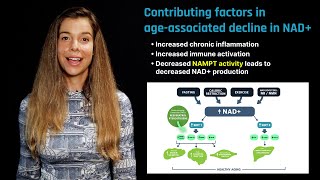
NAD+ in Aging: Role of Nicotinamide Riboside and Nicotinamide Mononucleotide
Rhonda Patrick
“…those concerns in this video but the possibility that intracellular nad levels can be increased with the supplement or several types of supplements is very interesting if not downright exciting for one simple reason nad levels decrease with age and a decrease”