Epigenetics and Biological Age
Epigenetics describes heritable changes in gene expression that do not alter the underlying DNA sequence — primarily DNA methylation and histone modification. Epigenetic clocks use methylation patterns at hundreds of CpG sites to estimate biological age with remarkable precision. Biological age can differ significantly from chronological age and is modifiable by lifestyle: exercise, diet quality, sleep, and stress reduction all influence methylation patterns. Partial epigenetic reprogramming via Yamanaka factors has reset biological age in animal models, making this one of the most active frontiers in longevity research.
Viewpoints
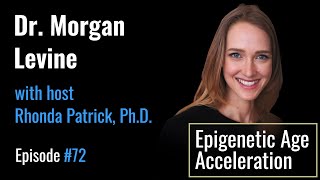
Morgan Levine: The epigenome is the operating system that controls which genes are expressed
Morgan Levine
“All cells share identical DNA yet a neuron and a liver cell behave entirely differently — this distinction is governed by the epigenome, the chemical tags and structural configurations that determine which genes are accessible. Epigenetic drift with aging dysregulates this programme, causing cells to lose their identity and adopt inappropriate expression patterns that underlie age-related dysfunction.”
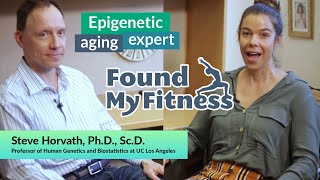
Steve Horvath: Epigenetic clock acceleration predicts health outcomes beyond chronological age
Steve Horvath
“The discrepancy between epigenetic age and chronological age is biologically meaningful — people whose methylation age runs ahead of their birth age show systematically worse health outcomes and shorter lifespan. This makes the clock a practical tool for measuring the effectiveness of longevity interventions, not merely an academic curiosity.”
Key Moments
Rhonda Patrick: Epigenetic reprogramming may be able to reverse the biological aging clock
Rhonda Patrick
“Research using Yamanaka transcription factors has shown that the epigenetic age of cells can be partially reset without erasing cell identity. This raises the prospect that aging as a program encoded in methylation patterns may be pharmacologically reversible — one of the most consequential frontiers in longevity medicine.”

Eric Verdin: Standard blood markers can be combined to compute a biological age score
Eric Verdin
“Biological age can be estimated from a panel of 20–40 routine blood markers — no specialised methylation assay required. By training algorithms on large cohorts, researchers can position any individual's biomarker profile to yield a practical biological age score accessible through a standard lab draw.”
Powered by Symmerai — a living index of public discourse. Request early access →
Related concepts
Other relevant clips
Morgan Levine, PhD, on PhenoAge and the Epigenetics of Age Acceleration — can we change the pace?
Rhonda Patrick
“…ion. [Rhonda]: Totally. I mean you can't look in the mirror and go, "I've got more DNA damage today," like, you know... [Dr. Levine]: Exactly, yeah. [Rhonda]: Like, but you could be. And lifestyle factors do play a role and you could have someone who is in the”
Morgan Levine, PhD, on PhenoAge and the Epigenetics of Age Acceleration — can we change the pace?
Rhonda Patrick
“…n your chronological age, so, the age you know that you are and your predicted age based on whether it's GrimAge or PhenoAge or any of these epigenetic clocks. And that, again, we think it's biologically meaningful. So, someone who's predicted much older than”
How Omega-3s May Slow Biological Aging (New Evidence)
Rhonda Patrick
“…ow, much younger or much older than your chronological age. And it really depends on how you're living your life. And so biological age, typically, we measure this through epigenetic aging. And these epigenetic aging clocks were developed by Dr. Steve Horvath”

Dr. Aubrey de Grey and Dr. Rhonda Patrick Talk Aging
Rhonda Patrick
“The only way you can actually ask questions about epigenetics that are meaningful with regard to actual aging, rather than adaptations to aging, is by looking at individual cells. Look at individual cells, single-cell analysis, then you can quantify the noise,”
Epigenetic Aging: How old is your DNA?
Rhonda Patrick
“predict the risk of cancer, heart disease, and death in general. And unlike many other ways of measuring disease risk, this even works in young people! This is all early research, and just because a test works in the context of a scientific study, doesn’t mean”
Dr. Steve Horvath on epigenetic aging to predict healthspan: the DNA PhenoAge and GrimAge clocks
Rhonda Patrick
“um who age more slowly you know and that in my opinion this um could already be observed in when you study let's say a person at a at a young age age 20 and draw their blood then if you followed them for 60 years you know you would find this consistency that p”
Dr. Steve Horvath on epigenetic aging to predict healthspan: the DNA PhenoAge and GrimAge clocks
Rhonda Patrick
“…f these animal studies are really good for trying to understand mechanism and yes all this data suggests you know you're you've got a a clock that can predict chronological age you've got a clock that can look at your biological age and also predict time to de”
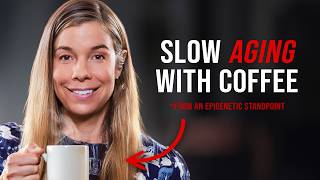
How To Use Coffee To Live Longer (Full Guide & Research)
Rhonda Patrick
“…The faster your epigenetic clock runs, the quicker you age and the sooner diseases of aging appear. But here's the fascinating part. Drinking coffee appears to actively slow this biological aging process. In fact, multiple large-scale studies show that regula”