Evaluating Supplements
Evaluating supplement efficacy requires distinguishing clinical evidence from marketing claims. Quality matters: third-party testing (USP, NSF) validates purity and dose. Bioavailability varies by form (e.g., magnesium glycinate vs oxide). Foundational supplements with strongest evidence include vitamin D, omega-3, magnesium, and B vitamins. Individual experimentation with biomarker feedback helps personalize.
Viewpoints
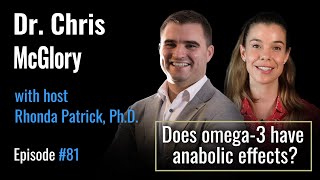
Rhonda Patrick: Trial design must account for omega-3 incorporation timelines
Rhonda Patrick
“Clinical trials evaluating omega-3 supplementation must account for the weeks-long process required for fatty acids to meaningfully alter cell membrane lipid profiles at typical doses. Conflicting results across studies often stem from insufficient supplementation duration rather than true inefficacy. A loading-phase approach—similar to knockout-then- rescue models in cell or rodent research—would maximize the chance of detecting an effect by ensuring lipid profiles are sufficiently modulated before measuring outcomes.”
Key Moments

Huberman: Supplements Following the Path from Fringe to Mainstream
Andrew Huberman
“Supplements like vitamin D3, omega-3 fatty acids, and magnesium have seen a dramatic rise in mainstream adoption, particularly since 2020, mirroring the trajectory of once-fringe practices like resistance training, breathwork, and meditation that are now widely accepted. Despite historical pushback from the medical community, the cultural and scientific legitimacy of targeted supplementation appears to be undergoing a similar normalization.”
Rhonda Patrick: supplement quality variability and genetic factors in vitamin D metabolism
Rhonda Patrick
“Vitamin D3 supplement quality varies dramatically, with some products delivering only a fraction of their labeled dose — third-party testing services like Labdoor and ConsumerLab can help identify reliable brands. Beyond supplement quality, genetic variants (SNPs) in the vitamin D metabolic pathway — particularly those affecting conversion of D3 to 25-hydroxyvitamin D — can significantly impair an individual's ability to raise circulating vitamin D levels even with adequate supplementation and sun exposure.”
Peter Attia: 269 - Good vs. bad science: how to read and understand scientific studies
Peter Attia
“with cancer if this is a drug that's being sought as a treatment for colon cancer these are going to be patients that all have colon cancer they're often going to be patients who have metastatic colon cancer right so these are going to be patients who have progressed through all other standard treatments uh and who are basically saying look sign me up for this clinical trial I realize that this first phase is not going to be necessarily giving me a high enough dose that I could experience a bene”
Rhonda Patrick: Why supplement research is systematically underfunded
Rhonda Patrick
“Supplement research faces a structural funding gap because companies cannot patent naturally occurring compounds, removing the financial incentive to fund expensive clinical trials whose results competitors could freely use. NIH, the backbone of US health research, deprioritizes supplements in grant competitions because they do not treat medical conditions — they promote and help prevent disease — leaving them perpetually outcompeted by research into cancer, Alzheimer's, and other serious conditions. This creates a cycle where the evidence base for supplements remains thin not because they lack potential, but because the economic and institutional incentives to study them are fundamentally misaligned.”
Rhonda Patrick: Why vitamin C trial inconsistencies stem from dosing and pharmacokinetics
Rhonda Patrick
“Achieving meaningful effects from vitamin C supplementation requires maintaining elevated plasma levels well above steady- state concentrations, which demands frequent dosing (e.g., 3g every 4 hours to sustain ~220 µmol/L). Many clinical trials show inconsistent results because they use inadequate doses or dosing intervals. Subgroups such as endurance athletes and children show the clearest benefits, with athletes experiencing ~50% fewer colds and children showing greater reductions in cold duration than adults.”

Rhonda Patrick: Quality control problems in sulforaphane supplements
Rhonda Patrick
“The sulforaphane supplement market has historically been plagued by mislabeling and fraud, with products sold as broccoli supplements containing no broccoli, or seeds sold as broccoli actually being alfalfa or canola. While quality has improved somewhat, the current market includes hundreds of supplements claiming to contain sulforaphane or glucoraphanin, and rigorous independent analysis is needed to verify their actual contents and activity. Supplements vary meaningfully in their formulation — some containing glucoraphanin alone, others combining glucoraphanin with myrosinase, and a few containing sulforaphane itself.”
Rhonda Patrick: Why negative supplement studies are often uninterpretable without biomarker data
Rhonda Patrick
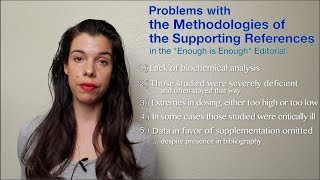
“Meta-analyses claiming vitamins and minerals have no effect on cancer incidence are often methodologically flawed because they fail to measure baseline or follow-up blood concentrations, making it impossible to determine whether dosing was adequate or participants were compliant. A striking example is a multivitamin trial showing cancer protection in men but not women — examination of plasma concentrations revealed the placebo group in women had equivalent or higher nutrient levels than the treatment group, explaining the null result. Without biochemical verification of actual nutrient status, negative findings from supplement trials cannot be meaningfully interpreted or generalized.”
Rhonda Patrick: Magnesium status determines whether vitamin D supplementation is effective
Rhonda Patrick
“Adequate magnesium intake is essential for the body to properly utilize vitamin D, because magnesium-dependent enzymes convert vitamin D3 into its main circulating form (25-hydroxy vitamin D). When magnesium intake is low—affecting roughly half the U.S. population—the body cannot effectively activate vitamin D even if intake is sufficient. Observational and randomized controlled trial evidence shows that the mortality-reducing benefits of higher vitamin D levels, particularly for cardiovascular disease and colorectal cancer, are significantly greater in individuals with above-average magnesium intake.”
Rhonda Patrick: NAD precursor supplementation and evidence hierarchy for NR vs NMN
Rhonda Patrick
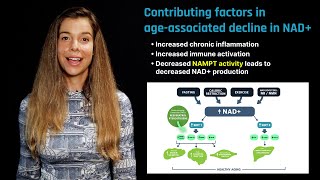
“While intravenous NAD administration shows preclinical promise for brain and cardiac protection, there is currently no published human data on oral NMN supplementation. By contrast, nicotinamide riboside (NR) has two randomized placebo-controlled trials demonstrating dose-dependent increases in NAD levels in white blood cells, including an 8-week study in 120 older adults where 250mg NR plus pterostilbene raised whole blood NAD by 40% versus placebo.”
Rhonda Patrick: Omega-3 incorporation into muscle membranes requires 4+ weeks
Rhonda Patrick
“Omega-3 fatty acids require at least four weeks of supplementation before significant changes are detectable in muscle phospholipid membranes, with effects plateauing between six and eight weeks. The mechanism involves gradual incorporation into cell and mitochondrial membrane phospholipids rather than acute signaling, which has direct implications for study design — trials investigating omega-3's anabolic effects on skeletal muscle protein synthesis should include a pre- loading period of at least four weeks to allow membrane saturation.”
Rhonda Patrick: Sulforaphane supplement trial design with biomarker tracking
Rhonda Patrick
“A Department of Defense-funded randomized controlled trial is evaluating the sulforaphane supplement Avmacol (containing glucoraphanin and myrosinase) versus placebo in approximately 50 young subjects over 15-week treatment periods with a washout crossover design. The trial is biomarker-rich, collecting blood samples to assess the biological effects of sulforaphane supplementation, with roughly one-third of subjects already processed. This represents a rigorous clinical evaluation of a specific sulforaphane-based dietary supplement's efficacy.”
Jed Fahey: Prostaphane sulforaphane supplement matches lab-extracted broccoli sprout bioavailability
Rhonda Patrick
“The French sulforaphane supplement Prostaphane, which requires refrigeration to preserve potency, demonstrates bioavailability essentially identical to lab-prepared broccoli sprout extracts treated with myrosinase and freeze-dried. This supplement has also shown clinical relevance in at least one published study examining its effect on PSA trajectory in prostate cancer patients. Despite this validated quality, it remains unavailable in the U.S. market.”
Jed Fahey: Prostaphane sulforaphane supplement matches lab-grade bioavailability
Rhonda Patrick
“The French sulforaphane supplement Prostaphane demonstrates bioavailability essentially identical to laboratory-prepared broccoli sprout extracts treated with myrosinase and freeze- dried. This supplement has shown clinical promise in altering PSA trajectory in prostate cancer patients, though it remains unavailable in the U.S. market. Refrigeration is required to preserve sulforaphane stability in tablet form.”
Rhonda Patrick: prophylactic vs. therapeutic vitamin C dosing for cold prevention
Rhonda Patrick
“Vitamin C is more effective when taken prophylactically than therapeutically: daily doses of 1–2 grams reduce cold duration by 17–26%, while therapeutic dosing begun only at symptom onset has no significant effect. Combined prophylactic and therapeutic regimens can reduce cold duration by about half a day, and the modest 4% risk reduction seen in larger meta-analyses may be partly explained by the inclusion of low 200 mg doses that are insufficient to saturate plasma levels.”
Rhonda Patrick: Vitamin D supplementation and epigenetic age reduction
Rhonda Patrick
“A small clinical trial (n=51) of vitamin D deficient obese African Americans given 4000 IU/day showed a ~1.8-year reduction in epigenetic age as measured by the Horvath clock, suggesting a potentially simple intervention may influence biological aging. However, the small sample size limits conclusions, and larger trials are needed to validate the finding. The broader challenge is that clinical trials for anti-aging interventions are expensive and underfunded, creating a bottleneck in evaluating whether straightforward supplements or more radical approaches like modified Yamanaka factors are needed.”
Rhonda Patrick: omega-3 supplements associated with slower biological aging via GrimAge
Rhonda Patrick
“Omega-3 fish oil supplementation was associated with slower biological aging as measured by the GrimAge epigenetic clock, suggesting that relatively accessible dietary interventions may meaningfully influence aging trajectories. However, larger clinical trials are urgently needed to validate such findings, as the field currently lacks sufficient experimental data to determine which interventions — whether supplements, hormones, plasma transfusions, or more radical approaches like Yamanaka factor cocktails — are most effective.”
Rhonda Patrick: food-first philosophy and quality standards for leucine supplementation
Rhonda Patrick
“Isolated supplements like leucine are a last resort compared to whole-food sources, as food matrices contain unknown synergistic bioactive compounds that likely outperform purified components — as illustrated by lycopene versus whole tomatoes. When supplementation is necessary, consumers should prioritize third- party tested products from domestic manufacturers to avoid the widespread quality issues in the supplement market.”
Rhonda Patrick: BCAAs are largely redundant on a high-protein diet, with leucine being the only meaningful component
Rhonda Patrick
“Branched-chain amino acid (BCAA) supplements have moved closer to the 'useless' end of the spectrum for individuals already consuming adequate protein, because leucine is the only BCAA that meaningfully drives muscle protein synthesis. For someone on a high-protein diet with quality whey protein, adding BCAAs is redundant. A possible exception exists for older adults, where leucine-fortified products may offer some incremental benefit.”
Rhonda Patrick: leucine supplementation in context of plant protein digestibility
Rhonda Patrick
“Fiber intrinsic to plants modestly inhibits protein absorption, but cooking largely eliminates this effect, making cooked legumes far more digestible than raw. Leucine supplementation is raised as a potential strategy to compensate for any remaining gaps in plant-based protein quality, particularly in the context of sarcopenia prevention.”
Powered by Symmerai — a living index of public discourse. Request early access →
Related concepts
Other relevant clips

Supplements for Longevity & Their Efficacy | Dr. Peter Attia
Andrew Huberman
“…and undervalued parameter so let's let's quickly return to supplements we I think are converging on an answer about NR nmn and NAD which is you don't take them correct I take NR and nmn with not a lot of religious adherence I should say if I ran out I might n”

276 ‒ Special episode: Peter on longevity, supplements, protein, fasting, apoB, statins, & more
Peter Attia
“…g something else but I think those are I think those are my supplements oh I mean uh sorry there's two others I take but they're not in the cabinet and that's why so I take athletic Greens in the morning disclosure I am an investor in that company I'm also an”
276 ‒ Special episode: Peter on longevity, supplements, protein, fasting, apoB, statins, & more
Peter Attia
“…other framework question which before we get to the list of supplements which I know people are anxious to get to you've often talked about your analogy of are you picking up a gold coin or a penny are you picking up in front of a train or a tricycle and often”
Supplements for Longevity & Their Efficacy | Dr. Peter Attia
Andrew Huberman
“…uch as energy levels digestion sleep and more so while many supplements out there are really directed towards obtaining one specific outcome ag1 is foundational nutrition designed to support all aspects of well-being related to mental health and physical healt”
The Effects of Microplastics on Your Health
Andrew Huberman
“…consider a really excellent website for thinking about and evaluating this kind of stuff which is examine.com I've talked a lot about this um site on the podcast before on examine.com they talk about the translation of the rodent studies to humans and here's”

Dr. Layne Norton on Building Muscle – Insights on Diet, Training, and Supplements
Rhonda Patrick
“…at I'm that I'm I'm having it stuff and that's you know the supplements I sell we sell there's we sell a sleep supplement there's other things in there there's like uh a few other ingredients that have been shown to improve sleep but melatonin is the big is th”
Dr. Layne Norton on Building Muscle – Insights on Diet, Training, and Supplements
Rhonda Patrick
“…pplement wise I mean if I had to build my Mount Rushmore of supplements it is very clearly three supplements it is creatin monohydrate caffeine whey protein the amount of research data on all three of those is enormous and honestly especially for creatin I jus”
How A Doctor Cured His Own Terminal Disease | Dr. David Fajgenbaum
Andrew Huberman
“…breast cancer where we're doing laboratory work. We're also evaluating clinical data and I hope at some point in the future that the data is strong enough and if it is then we'll we'll we'll work to to encourage every woman who's about to go in for breast canc”