Stress Resilience
Chronic psychological stress dysregulates the HPA axis, sustains elevated cortisol, drives systemic inflammation, shortens telomeres, and accelerates biological aging. Allostatic load — the cumulative physiological wear from repeated stress without adequate recovery — is a measurable predictor of disease and mortality. Resilience is not simply the absence of stress but the capacity to recover from it: measurable through HRV, cortisol diurnal rhythm, and telomere length. Interventions including exercise, mindfulness, breathwork, social connection, and adequate sleep all demonstrably improve biological stress markers.
Viewpoints
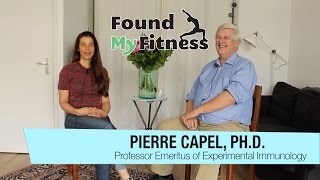
Pierre Capel: Chronic stress literally ages your DNA and shrinks your brain
Pierre Capel
“Unmanaged chronic stress is not just psychologically damaging — it ages DNA, shortens telomeres, atrophies hippocampal volume, and dysregulates the neuroendocrine system in measurable, reversible ways. The distinction between functional acute stress (which is adaptive) and chronic unresolved stress (which is destructive) is the key dividing line, and learning to shift from one to the other is a trainable skill with profound biological consequences.”
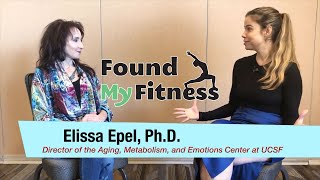
Elissa Epel: Psychological stress interventions measurably improve biological stress markers
Elissa Epel
“Controlled intervention studies on mindfulness, exercise, and stress-reduction techniques show measurable improvements in telomere length, cortisol diurnal rhythm, and inflammatory markers. The biological damage from chronic psychological stress is not fixed — it is partially reversible when the right interventions are applied consistently, even in high-stress populations.”
Key Moments
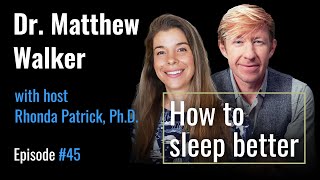
Matthew Walker: Insomnia is a chronically activated fight-or-flight nervous system
Matthew Walker
“The overarching biological mechanism of chronic insomnia is a hyperactivated sympathetic nervous system that cannot down-regulate at night. Sleep deprivation and chronic stress feed each other in a reinforcing loop — elevated cortisol fragments sleep, and fragmented sleep elevates cortisol — making it impossible to treat either condition without addressing both simultaneously.”
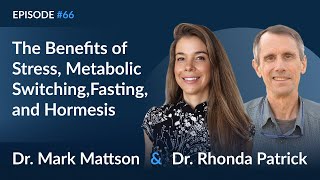
Mark Mattson: Intermittent stress followed by recovery builds neurological resilience
Mark Mattson
“Cyclical stress exposures — mimicking the feast-famine and activity-rest patterns humans evolved with — preserve reproductive cycling and stress-coping capacity into older age in animal models. Chronic uninterrupted stress without recovery phases depletes resilience, while structured intermittent stressors rebuild it through hormetic adaptation of stress-response pathways.”
Powered by Symmerai — a living index of public discourse. Request early access →
Related concepts
Other relevant clips
![Q&A with Dr. Jed Fahey on Sulforaphane, Moringa and Chemoprotection [An authoritative discussion!]](https://img.youtube.com/vi/-PNGxNzogOY/mqdefault.jpg)
Q&A with Dr. Jed Fahey on Sulforaphane, Moringa and Chemoprotection [An authoritative discussion!]
Rhonda Patrick
“…uch more is being learned about that brain health cognition stress resilience it goes on and on and on and the literature is robust whereas it is not for either cold therapy or carnivorism i i would like you mentioned and then certainly in this clip they talke”
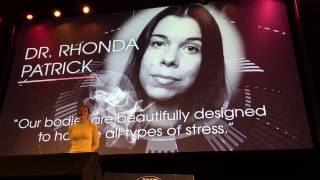
Use of Sauna and Cold to Increase Net Resilience, Mitochondrial Biogenesis, Mood and Longevity
Rhonda Patrick
“…alk so are we're able to heal uh handle this these types of stresses with you know various genetic Pathways but when you when you can flip that switch on to those genetic Pathways with something that's just slightly stressful on the body something like exercis”
Use of Sauna and Cold to Increase Net Resilience, Mitochondrial Biogenesis, Mood and Longevity
Rhonda Patrick
“…hD uh I was experiencing a combination of both good and bad stress the good stress was I was learning how to be a scientist I was learning tools and techniques um to answer interesting scient scientific questions that I had um and that was good I was adapting”
Dr. Giselle Petzinger on Exercise for Parkinson's Disease
Rhonda Patrick
“…ecause the i mean the exercise in a sense is is the type of stress on the body it's something that we actually evolved doing we before we were in our you know industrialized society where we sit in our office in cubicles we were out you know hunting gathering”
How To Increase Your Testosterone Levels Naturally | Derek from MPMD
Rhonda Patrick
“…re constantly anxious and having that kind of suppressed uh stress response can be very very net beneficial. And then on top of that improves their sleep and also improves their testosterone through the uh reduction of the kind of like gluccocorticoid response”

Dr. Rhonda Patrick: Maximizing Healthspan with Exercise, Sauna, & Cold Exposure
Rhonda Patrick
“…ect where you're giving the little dose of a a good type of stress and the response to that stress is so robust that it really is just improving the way you age. It's resilience. It's building resilience and that's really what we're talking about today. [snort”
Dr. Dale Bredesen on Preventing and Reversing Alzheimer's Disease
Rhonda Patrick
“…status, in their lifestyle status, in their sleep, in their stress levels, these are surprisingly important. One of the first people who came through was a very intelligent physician. And as we went through each thing he said to me, "Well, you know, I don't be”
Judith Campisi, Ph.D. on Cellular Senescence, Mitochondrial Dysfunction, Cancer & Aging
Rhonda Patrick
“…also, again, tissue repair. So the way we now think of the stress response is that it's a double-edged sword. There's tons of data that go back two decades or more showing that the arrest of cell proliferation is extremely important for preventing cancer. So”