Cognitive Decline and Dementia Prevention
Alzheimer's disease and other dementias are not inevitable consequences of aging but have substantial modifiable risk. The FINGER trial demonstrated that a multi-domain lifestyle intervention combining exercise, diet, cognitive training, and cardiovascular management reduced cognitive decline by 31% in at- risk individuals. APOE4 carriers face two- to three-fold increased Alzheimer's risk but respond particularly strongly to lifestyle modifications. Emerging evidence positions Alzheimer's partly as a metabolic disease — insulin resistance in the brain impairs glucose utilization and accelerates amyloid and tau pathology. Sleep, omega-3s, exercise, and social engagement are among the strongest protective factors.
Viewpoints

Rhonda Patrick: APOE4 gene variant dramatically increases Alzheimer's risk and requires targeted lifestyle modification
Rhonda Patrick
“The APOE4 allele is the strongest genetic risk factor for late-onset Alzheimer's disease, increasing lifetime risk two- to three-fold for carriers of one copy and eight- to twelve- fold for those with two copies. APOE4 impairs amyloid clearance, reduces mitochondrial function in neurons, and increases neuroinflammation. However, APOE4 carriers show some of the strongest benefits from lifestyle interventions: aerobic exercise, DHA supplementation, and sleep optimization have outsized effects in APOE4 carriers compared to non-carriers, suggesting that knowing one's APOE status enables targeted preventive action rather than fatalism.”
Dale Bredesen: Alzheimer's is a protective response to metabolic, toxic, and inflammatory insults — not a single disease
Dale Bredesen
“Dale Bredesen's ReCODE framework reconceptualizes Alzheimer's disease as a protective synaptic downsizing response to at least 36 identified insults — metabolic, toxic, infectious, and inflammatory — rather than a single disease with a single cause. This reframing explains why single-target drug trials have largely failed and why multimodal lifestyle interventions addressing multiple insults simultaneously have shown clinical efficacy in reversing early cognitive impairment. The practical implication is that prevention and treatment require identifying and addressing individual root causes rather than applying a universal protocol.”
Key Moments
Matthew Walker: sleep deprivation accelerates amyloid accumulation and increases Alzheimer's risk
Matthew Walker
“Sleep is when the glymphatic system clears metabolic waste from the brain — including amyloid-beta, which accumulates during waking hours. Even a single night of sleep deprivation measurably increases brain amyloid burden in healthy adults. In long-term studies, individuals with self-reported poor sleep quality in midlife have significantly higher rates of subsequent Alzheimer's disease diagnosis, independent of other risk factors. Walker argues that sleep disruption is not merely a symptom of Alzheimer's but a modifiable causal upstream factor — making sleep optimization one of the highest-leverage preventive interventions available.”
Peter Attia: measuring and optimizing cognitive reserve through early biomarker testing and lifestyle
Peter Attia
“Dementia typically reflects brain changes that began 20-30 years before clinical symptoms appear, making early intervention critical. Peter Attia emphasizes building cognitive reserve through a portfolio approach: optimizing cardiovascular fitness (which strongly predicts brain volume), controlling insulin resistance, optimizing sleep, and managing specific risk factors like APOE4 status. He argues for early biomarker testing including PET amyloid scans, blood-based amyloid/tau ratios, and ApoE genotyping to stratify risk and personalize prevention decades before symptoms emerge.”
Powered by Symmerai — a living index of public discourse. Request early access →
Related concepts
Other relevant clips
This Supplement Could Cut Your Dementia Risk By 40%
Rhonda Patrick
“…rdless of whether or not the participants had baseline mild cognitive decline or normal cognitive function. So vitamin D seemed to provide a benefit in both of those scenarios. And while dementia prevalence was higher in adults with mild cognitive impairment,”
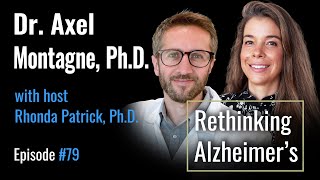
Axel Montagne, PhD, on Solving Alzheimer’s and Dementia with Blood-Brain Barrier Repair
Rhonda Patrick
“…ls but also a plasma biomarker um and this is these were in cognitively normal individuals I'm not sure what age range but that seems like extremely important because you're if you're talking about a new potential diagnostic well before you know cognitive decl”
This Supplement Could Cut Your Dementia Risk By 40%
Rhonda Patrick
“…people with either Alzheimer's disease or people with mild cognitive impairment. So both in both those scenarios and people with mild cognitive impairment if they took around 800 IUs of vitamin D daily for a year they had significant improvements in multiple”
Axel Montagne, PhD, on Solving Alzheimer’s and Dementia with Blood-Brain Barrier Repair
Rhonda Patrick
“…ll have a lightly good and more chance to develop Community decline quickly as compared to a normal like a normal tensive person of the same age and interestingly they were showing also in the paper that is during this your 70s if I remember karate uh it doesn”
The Truth About Alcohol: Risks, Benefits, and Everything In-Between
Rhonda Patrick
“…because it addresses a population at an increased risk for cognitive decline and dementia the study's design cleverly accounts for what's known as the sick quitter effect again this bias where individuals who have stopped drinking due to health issues might s”
The Truth About Alcohol: Risks, Benefits, and Everything In-Between
Rhonda Patrick
“…adults aged 59 to 71 years old found something similar for cognitive decline like previous studies adults who reported consuming two or more alcoholic drinks per day had no copies of the AP we4 ail had a 30 to 74% lower risk of cognitive decline compared to n”
Dr. Rhonda Patrick: Optimizing Longevity with Micronutrients & Vigorous Exercise
Rhonda Patrick
“…ials that supplementing with vitamin D can actually improve cognitive function. Um there are two trials that I have here that I want to talk about. One was actually with Alzheimer's patients. So people that had Alzheimer's disease and they were actually only g”
Dr. Matthew Walker on Sleep for Enhancing Learning, Creativity, Immunity, and Glymphatic System
Rhonda Patrick
“development of dementia and cognitive decline, is part of that...I'm not trying to say it's all about sleep. But, the part of it about sleep, you know... [Rhonda]: Really, you know, one of my major interest is aging, increasing health span, as well as performa”