Protein Intake
Dietary protein is the primary anabolic signal for muscle protein synthesis (MPS), with leucine — a branched-chain amino acid abundant in whey and animal proteins — acting as the key mTOR activator. Approximately 20–40 g of high-quality protein per meal is needed to maximally stimulate MPS, and older adults require more to overcome age-related anabolic resistance. Distributing protein evenly across meals and timing intake around resistance exercise further optimises muscle maintenance and growth across the lifespan.
Viewpoints

Rhonda Patrick: Exercise-triggered leucine uptake drives muscle mTOR without systemic activation
Rhonda Patrick
“During and after resistance exercise, leucine is preferentially taken up by contracting muscle where it activates mTOR locally to drive protein synthesis and repair. This exercise-mediated partitioning is beneficial because it confines mTOR activation to muscle tissue rather than triggering systemic mTOR in the vasculature — an important distinction for longevity-oriented protein timing strategies.”
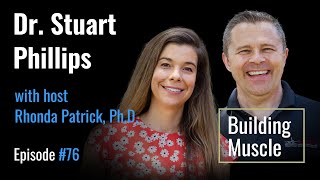
Stuart Phillips: Older adults need more protein per meal to overcome anabolic resistance
Stuart Phillips
“Aging blunts the muscle protein synthetic response to a given dose of protein — anabolic resistance. To compensate, older adults require a higher per-meal protein dose (around 40 g versus the 20 g that saturates MPS in young individuals) and benefit especially from leucine-rich sources combined with resistance training to maintain muscle mass and prevent sarcopenia.”
Key Moments
Rhonda Patrick: 20 g high-quality protein provides the leucine threshold to maximally stimulate MPS
Rhonda Patrick
“The minimum leucine dose to switch on mTOR-mediated MPS is reached with approximately 20 g of a complete, high-quality protein such as whey. Leucine is the master trigger but all essential amino acids are required substrates — subthreshold doses drive amino acid oxidation rather than net muscle accretion, making dose adequacy critical for training adaptation.”

Luc Van Loon: Distributing protein evenly across meals maximises long-run muscle anabolism
Luc Van Loon
“Distributing daily protein across three to four evenly spaced meals maximises the efficiency with which amino acids are used for MPS. Eating the majority of protein at a single meal drives amino acid oxidation rather than anabolism — making distribution as important as total daily intake, especially for older adults trying to prevent sarcopenia.”
Powered by Symmerai — a living index of public discourse. Request early access →
Related concepts
Other relevant clips
The Science of Protein and Its Role in Longevity, Cancer, Aging, and Building Muscle
Rhonda Patrick
“despite consuming more protein enjoy Better Health and longer lifespans than the general population the bottom line is that for active individuals higher protein intake supports performance longevity and health all right everyone that just about does it for ou”
The Science of Protein and Its Role in Longevity, Cancer, Aging, and Building Muscle
Rhonda Patrick
“healthy people should limit their protein consumption higher protein diets do induce changes in kidney function but they do not overburden the kidneys The observed increase in markers in kidney function is a normal adaptive response to eliminate Ura and other”
Stuart Phillips, PhD, on Building Muscle with Resistance Exercise and Reassessing Protein Intake
Rhonda Patrick
“And then the next one would be, sort of, protein quality where, you know, we get into some of the more nuanced talk about protein. And then you can dial it down from there. Most people I talk to, I just say, you know, "Do you go to the gym?" And they're like,”
Dr. Luc Van Loon: Optimizing Protein Intake & Distribution for Muscle Growth
Rhonda Patrick
“…we try to optimize or maintain at least the total amount of protein that they were consuming before they went into the hospital that will attenuate or at least attenuate a little bit the muscle loss that they have so maintenance of your normal protein intake i”
Dr. Luc Van Loon: Optimizing Protein Intake & Distribution for Muscle Growth
Rhonda Patrick
“…elf-fulfilling prophecy because if your body adapts to more protein it will need more protein so that is that is just natural in in the situation your body adapts to its use so you can actually maintain your your body mass on a low protein intake and on a high”
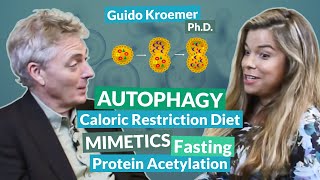
Dr. Guido Kroemer on Autophagy, Caloric Restriction Mimetics, Fasting & Protein Acetylation
Rhonda Patrick
“…nd in humans, ultimately, you know, can you just limit your protein intake for a week and induce autophagy even in the presence of a normally caloric diet where you're still getting enough energy. That's a good question. We have never tested to selective compl”

How to Train According to the Experts
Rhonda Patrick
“…we put evidence for into this guide they recommended these protein intakes quoted that it was very important but all of them really emphasize that nothing kind of compares to the resistance training so yeah protein intake is important but if you're not resist”

Dr. Layne Norton on Building Muscle – Insights on Diet, Training, and Supplements
Rhonda Patrick
“…on's lab has kind of challenged this but in terms of muscle protein synthesis it appears that you know kind of caps out at a certain level on a permal basis and so if you're older let me back up for younger people 10 gram of protein probably still does stimula”