Hormesis and Stress Adaptation
Hormesis describes the phenomenon in which low-to-moderate doses of a stressor — exercise, heat, cold, fasting, or phytochemicals — produce beneficial adaptive responses, while high doses of the same stressor are harmful. The hormetic response is characterized by upregulation of protective pathways including heat shock proteins, NRF2-driven antioxidant defenses, AMPK activation, and autophagy. These adaptations improve cellular resilience and stress resistance at baseline, forming the mechanistic basis for why exercise, sauna, cold exposure, and phytochemical-rich foods improve health. Xenohormesis — consuming stressed plant compounds that activate mammalian longevity pathways — represents an evolutionary extension of this principle.
Viewpoints
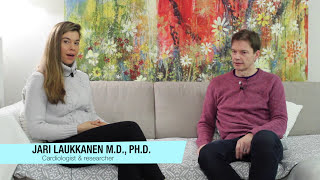
Jari Laukkanen: sauna-induced heat stress is a hormetic intervention that trains cardiovascular and cellular stress response
Jari Laukkanen
“The repeated controlled stress of sauna bathing constitutes a textbook hormetic intervention: each session imposes a transient physiological challenge that activates heat shock proteins, increases plasma volume, and trains the cardiovascular system to handle acute stress more efficiently. The outcome is improved baseline function and resilience — lower resting heart rate, better vascular compliance, and more robust heat shock protein expression — that persists between sessions and compounds over years of regular use. This hormetic framing explains why the epidemiological benefits of sauna are dose-dependent: more frequent, more intense exposure produces progressively greater adaptive benefit up to a threshold.”
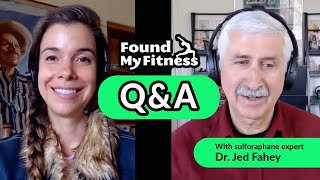
Jed Fahey: phytochemical hormesis — sulforaphane activates NRF2 by acting as a mild pro-oxidant stressor
Jed Fahey
“Sulforaphane exemplifies xenohormesis: it is a stress compound produced by broccoli plants under attack, and when consumed by mammals, acts as a mild electrophilic stressor that modifies Keap1 — the repressor of NRF2 — triggering a cytoprotective transcriptional response far exceeding the initial insult. This indirect antioxidant mechanism differs fundamentally from direct antioxidants like vitamin C: rather than quenching free radicals, sulforaphane activates the cell's own endogenous antioxidant and detoxification machinery for hours to days. The hormetic dose-response means that modest amounts of broccoli sprouts produce greater cytoprotection than larger doses of isolated supplements.”
Key Moments

Rhonda Patrick: exercise is the prototypical hormetic stressor — the damage from training drives adaptation
Rhonda Patrick
“Exercise works precisely because it is a controlled stressor: mechanical damage to muscle fibers, oxidative stress from mitochondrial metabolism, and metabolic disruption all trigger adaptive responses that build back stronger tissue and more efficient cellular machinery. Blocking the exercise-induced stress response — for instance with high-dose antioxidants like vitamin C and E taken immediately post-exercise — blunts the adaptive signal and reduces training gains. This is a practical application of hormetic biology: the discomfort of exercise is not a side effect to be suppressed but the mechanism through which benefit is conferred.”
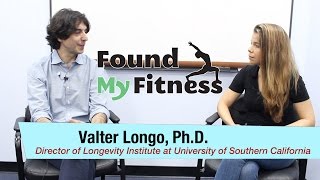
Valter Longo: fasting mimicking diet as a hormetic stressor that activates longevity pathways and cellular rejuvenation
Valter Longo
“Periodic fasting or fasting-mimicking diets act as hormetic stressors: the transient nutrient deprivation activates AMPK, suppresses mTOR, induces autophagy, and reduces circulating IGF-1 and insulin — a coordinated shift into a maintenance and repair mode. When feeding resumes, the subsequent refeeding activates stem cell proliferation and tissue regeneration. In mouse models, repeated fasting-mimicking diet cycles extend lifespan, reduce cancer incidence, and rejuvenate multiple organ systems. The hormetic principle is central: it is not the starvation itself that confers benefit but the oscillation between controlled stress and recovery.”
Powered by Symmerai — a living index of public discourse. Request early access →
Related concepts
Other relevant clips
Dominic D'Agostino, Ph.D. on Modified Atkins Diet, Keto-Adaptation, Ketosis & More
Rhonda Patrick
“…ed by the stressor of it. So I think, to some extent, it is hormesis. And interestingly, metformin causes mitochondrial stress, and actually, mitochondrial damage. Some researchers coined the term that it's stimulating reactive oxygen species production and ca”
Dr. Mark Mattson on the Benefits of Stress, Metabolic Switching, Fasting, and Hormesis
Rhonda Patrick
“…[Dr. Patrick]: Perhaps, I think, there was no weight loss. And there were some benefits. There was, you know, metabolic benefits. I can't recall all of them. But, again, coming down to knowing what you've discussed with these stress response pathways and cyto”
Dr. Mark Mattson on the Benefits of Stress, Metabolic Switching, Fasting, and Hormesis
Rhonda Patrick
“in the field of biological stress in general and intermittent fasting and the effects on the brain.”

Why Exercise Intensity Matters for Longevity | CrossFit for Health 2024
Rhonda Patrick
“…200 degree Fahrenheits on or 25 or whatever it is very hot and there are studies anal studies and stuff like when you get too hot you can actually permeabilize the the bloodb brain barrier um and so I know it's like there's this go hard and there always this”

Dr. David Sinclair on Informational Theory of Aging, Nicotinamide Mononucleotide, Resveratrol & More
Rhonda Patrick
“…always have your body in a state of a little bit of stress, hormesis, we call that. [Rhonda]: Yes. People that are listening to the podcast have heard me talk about hormesis quite a bit. My favorite is sulforaphane, the molecule in the cruciferous vegetables.”

How Vitamin D, Omega-3s, & Exercise May Increase Longevity | Dr. Rhonda Patrick
Rhonda Patrick
“…hought it would be a good time to introduce this concept of hormesis, and I was hoping you could give us a little bit of a primer. What are we talking about when we refer to hormesis? Rhonda: Yeah, it's a term, I think it might have originated from some of the”
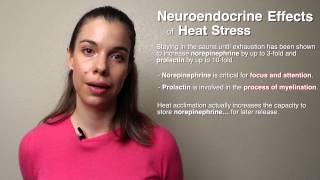
How to Increase Athletic Endurance and Muscle Mass through Sauna Use with Dr. Rhonda Patrick
Rhonda Patrick
“…ty tradeoff the reason for this is that heat stress induces hormesis and that causes the increase in expression in genes and protein proteins such as heat chock proteins that are known to improve longevity intermittent heat exposure and heat acclamation also h”
Dr. Ashley Mason on Sauna Use for Depression, Conquering Insomnia, and Mindfully Breaking Bad Habits
Rhonda Patrick
“And, you know, there have been studies showing that, you know, the more you expose yourself to heat, whether...or the more you elevate your core body temperature, which can be through, you know, ambient heat, so like a sauna, or a hot bath, or a steam shower o”