Sulforaphane and NRF2 Activation
Sulforaphane is an isothiocyanate produced when glucoraphanin in cruciferous vegetables is hydrolyzed by myrosinase — an enzyme released by chewing or by gut bacteria. It is one of the most potent known activators of the NRF2 pathway, which coordinates upregulation of over 200 cytoprotective genes involved in detoxification, antioxidant defense, and anti-inflammatory signaling. Broccoli sprouts contain 10-100x more glucoraphanin than mature broccoli, making them the most efficient dietary source. Cooking deactivates myrosinase, so preparation method critically affects bioavailability.
Viewpoints
Rhonda Patrick: broccoli sprouts contain 100x more glucoraphanin than mature broccoli
Rhonda Patrick
“Three-day-old broccoli sprouts contain concentrations of glucoraphanin — the precursor to sulforaphane — that are approximately 10 to 100 times higher than mature broccoli, making a small serving of sprouts equivalent in sulforaphane potential to far larger quantities of the vegetable. Sulforaphane is the most potent known activator of the NRF2 transcription factor, which upregulates a network of phase II detoxification enzymes and antioxidant defenses in virtually every cell type. These cytoprotective effects position sulforaphane as one of the most pharmacologically active compounds in the human diet.”
Jed Fahey: cooking destroys myrosinase and dramatically reduces sulforaphane bioavailability
Jed Fahey
“Myrosinase, the enzyme that converts glucoraphanin to sulforaphane, is heat-labile and is inactivated by cooking temperatures above roughly 70°C. Steaming or boiling broccoli for more than a few minutes can reduce sulforaphane yield by over 90%. Consuming raw sprouts or adding powdered sprout supplements that retain intact myrosinase activity — or pairing cooked broccoli with a myrosinase source like mustard seed powder — are practical strategies to preserve bioavailability.”
Key Moments
Jed Fahey: pure isothiocyanates from sprouts outperform extracts in cancer prevention models
Jed Fahey
“Studies comparing whole sprout preparations with purified glucoraphanin extracts suggest that the intact food matrix — including intact myrosinase and co-occurring glucosinolates — produces higher and more consistent sulforaphane delivery than purified supplements. Pure isothiocyanates from sprouts show dose-dependent chemopreventive effects in rodent carcinogen models, and the complexity of the intact food may contribute to superior bioavailability compared to isolated compounds.”
Jed Fahey: sulforaphane induces phase II enzymes to protect against continuous carcinogen exposure
Jed Fahey
“Humans are exposed to a continuous low-level stream of carcinogens through diet, air, and water, and the relevant question for chemoprevention is not acute toxicity but chronic cumulative exposure. Sulforaphane's induction of phase II detoxification enzymes — including glutathione S-transferases, NQO1, and HO-1 — enhances the cell's capacity to neutralize reactive intermediates before they cause DNA damage, providing a sustained protective effect against this background carcinogen burden.”
Powered by Symmerai — a living index of public discourse. Request early access →
Related concepts
Other relevant clips
Jed Fahey, Sc.D. on Isothiocyanates, the Nrf2 Pathway, Moringa & Sulforaphane Supplementation
Rhonda Patrick
“It's called Keap1. That molecule when it binds to sulforaphane, or vice versa, changes in conformation and it releases Nrf2, which then migrates to the nucleus and turns on or up-regulates the antioxidant response element which is responsible for the transcrip”
Jed Fahey, Sc.D. on Isothiocyanates, the Nrf2 Pathway, Moringa & Sulforaphane Supplementation
Rhonda Patrick
“…have come to us recently with the question, "Okay, we know sulforaphane reduces inflammation. You know, can it possibly help with autism, Alzheimer's and schizophrenia?" The three that we're actually looking at. I should back up, though, and say that sulforap”
![Q&A with Dr. Jed Fahey on Sulforaphane, Moringa and Chemoprotection [An authoritative discussion!]](https://img.youtube.com/vi/-PNGxNzogOY/mqdefault.jpg)
Q&A with Dr. Jed Fahey on Sulforaphane, Moringa and Chemoprotection [An authoritative discussion!]
Rhonda Patrick
“that's a way of saying that's sort of where sulforaphane comes into that detoxification pathway one of one of many ways but it's the probably one of the most important ways yeah we are going to talk a little bit more about glutathione another question but i ju”
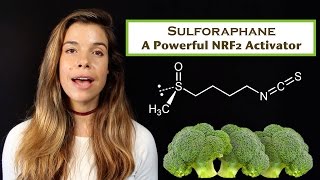
Sulforaphane and Its Effects on Cancer, Mortality, Aging, Brain and Behavior, Heart Disease & More
Rhonda Patrick
“…e of the most important mechanisms by which damaged neurons and synapses repair themselves after damage from TBI. NRF2 is also key for growing new neurons which is largely regulated by growth factors that are able to promote the growth of new neurons and promo”
Q&A with Dr. Jed Fahey on Sulforaphane, Moringa and Chemoprotection [An authoritative discussion!]
Rhonda Patrick
“…so end of that rant but the the multiplicity of effects of sulforaphane that you mentioned are i'm glad you brought up the fact that nrf2 is not the only thing in the world there's the anti-inflammatory effect of sulforaphane there's a heat shock inducing eff”
Sulforaphane and Its Effects on Cancer, Mortality, Aging, Brain and Behavior, Heart Disease & More
Rhonda Patrick
“…to help illuminate this for us. Any discussion of the brain and inflammation would not be complete without mention of neurodeenerative diseases which are often considered to be diseases of aging themselves and also traumatic brain injury for which chronic infl”
Gordon Lithgow, Ph.D. on Protein Aggregation, Iron Overload & the Search for Longevity Compounds
Rhonda Patrick
“Sulforaphane is...are you familiar with sulforaphane? [Gordon]: No, please tell me. [Rhonda]: So sulforaphane is a xenohormetic compound. It is produced in cruciferous plants. So, you know, anything from broccoli to kale to cauliflower. [Gordon]: Oh, yeah. I r”
Dr. Mark Mattson on the Benefits of Stress, Metabolic Switching, Fasting, and Hormesis
Rhonda Patrick
“…sense. Yep. Although I should say that... So, going back to sulforaphane and the NRF2-ARE pathway. That is activated by exercise and fasting. And so, I would say this. These chemicals that are in the plants are more targeted in what they do. Compared to exerci”