Mergers & Acquisitions
How deals create or destroy value. Rene Haas recounts NVIDIA's blocked ARM bid, Kyle Grieve explains Constellation Software's arbitrage from 5x private multiples to public ones, Niklas Sävås contrasts it with Berkshire's centralised model, and Zach Perret Plaid's year pending under Visa.
Viewpoints
Grieve: Serial acquirers profit from public-private market arbitrage
Kyle Grieve
“Serial acquirers like Constellation Software create value through market arbitrage by acquiring private companies at low multiples (around 5x EV/EBITDA) and immediately revaluing them at public market multiples (around 28x EV/EBITDA). This arbitrage opportunity exists because private markets have inefficiencies compared to public markets, including lower transparency, worse liquidity, and less competition for deals. Building resilience through multiple acquisitions creates diversified revenue streams across different customers and suppliers, protecting downside risk while the business compounds over time.”

Ferrari: Disciplined M&A strategy requires staying within circle of competence
Luca Ferrari
“A successful acquisition strategy should focus on digital technology within one's circle of competence, occasionally pushing boundaries to expand the total addressable market but avoiding massive leaps outside expertise. Due to the hands-on, time-consuming nature of deep operational transformation, a disciplined approach targets only 5 acquisitions per year (ranging from 1 to 10 maximum), prioritizing quality and depth over volume.”
Key Moments
Grieve: Conglomerates vs. serial acquirers - financial engineering distinction
Kyle Grieve
“Conglomerates of the 1960s go-go years differed fundamentally from modern serial acquirers like Berkshire Hathaway. While Berkshire buys quality businesses at fair prices and holds them indefinitely, go-go era conglomerates exploited financial engineering rather than building operating excellence, diversifying through mergers across completely unrelated industries like machine tools, ice cream, helicopters, and eyeglass frames.”

Sävås: Scaling models in serial acquisition strategies
Niklas Sävås
“Berkshire Hathaway and Constellation Software represent contrasting approaches to serial acquisition: Berkshire's centralized capital allocation has forced it toward larger deals as it grew, while Constellation decentralized M&A to maintain small programmatic acquisitions. Nordic serial acquirers typically cap around 20-25 companies annually, a scale where CEOs can still maintain final decision authority without fully decentralizing.”

Escobari: Patient capital strategy drove Brahma's acquisition dominance
Martín Escobari
“Brahma's success in capturing 95% equity value in its merger with Antarctica exemplifies a 'spearfishing' approach to business strategy: anchoring in position, exercising patience, and waiting for major opportunities rather than chasing smaller gains. This patient, selective approach to value creation led to 10x wealth creation compared to competitors during Brazil's volatile 1990s.”

Haas: NVIDIA-ARM merger blocked despite being vertical integration
Rene Haas
“The attempted acquisition of ARM by NVIDIA was a vertical merger rather than horizontal, which typically faces less regulatory opposition unless it forecloses markets or stifles competition. Despite ARM's revenue being predominantly from smartphones (a market NVIDIA doesn't compete in), regulators blocked the deal, surprising advocates who expected approval since it didn't violate traditional vertical integration concerns and regulators typically focus on near-term rather than long-term market effects.”
Ferrari: Learning from mistiming a viral acquisition
Luca Ferrari
“Acquiring a product at the peak of its viral moment can lead to drastically inferior returns when the viral wave subsides immediately after purchase. This experience teaches the importance of being paranoid about user acquisition sources and understanding the sustainability of growth drivers before making an acquisition decision, even when believing you've been conservative in your assumptions.”

Perret: Maintaining startup velocity during pending acquisition
Zach Perret
“During Plaid's year-long pending acquisition by Visa, the company maintained startup-level growth and operations by securing independence and CEO continuity in the deal terms. When the DOJ signaled intent to sue to block the acquisition, the anticipated two-year legal battle and Plaid's improved business performance made walking away from the deal the better option, as the original concerns that motivated selling had dissipated.”

Wright: Private equity faces valuation and M&A challenges
Alex Wright
“Private equity funds are experiencing challenges due to lack of IPOs and M&A exits, causing them to hold portfolio companies for extended periods (5-15 years). Growth private equity is under particular pressure because over 90% of returns historically came from revenue growth and multiple expansion, both of which face headwinds as multiples have declined from peak levels of 12-13x cash flow and economic uncertainty threatens revenue growth.”

Khosrowshahi: IAC's acquisition of Expedia despite 9/11 MAC clause
Dara Khosrowshahi
“IAC acquired Expedia through a multi-stage transaction that began with purchasing Microsoft's controlling stake while Expedia remained public, then later acquiring the entire company. The deal faced a critical moment when the term sheet was signed before September 11th, 2001, and though a material adverse change clause legally allowed IAC to exit after the terrorist attacks devastated the travel industry, they chose to proceed with the acquisition.”
Powered by Symmerai — a living index of public discourse. Request early access →
Related concepts
Other relevant clips
The Search for Mispriced Stocks w/ Clay Finck (TIP782)
Clay Finck
“…over the next stock to add to your portfolio or watch list. Acquisitions can be troublesome if management's ego gets involved and they get too far ahead of themselves not keeping shareholders in mind. In management's appetite for acquisitions is typically at i”
Your Valuation Metrics Might Be Lying to You w/ Kyle Grieve (TIP775)
Kyle Grieve
“…est in startups. And the third is that companies now prefer mergers and acquisitions over going public. It's easier for a small firm to sell to a larger firm than to deal with public markets. So you may be tired of me talking about Amazon, but is obviously a g”

How A Blogger Built a $200M ETF With Stocks You’ve Never Heard Of | Eddy Elfenbein
Eddy Elfenbein
“…hese crazy offbalance sheet things, and they don't do these mergers and acquisitions and big floating bonds, things like that. It's usually pretty straightforward and simple. It's a good business and they do well. >> It's kind of fun too on on these type of si”
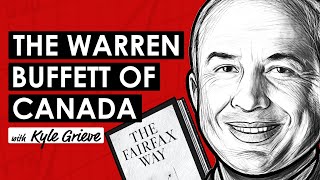
How Prem Watsa Built the "Berkshire Hathaway Of Canada" | The Fairfax Way w/ Kyle Grieve (TIP783)
Kyle Grieve
“…but as a guiding light for capital allocation decisions in mergers and acquisitions, organic growth and share purchases. What Watson understands just as well as Warren Buffett is value. And because of that he has on several occasions tried to keep investor se”
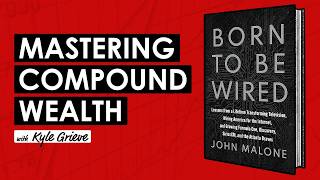
How John Malone Compounded Wealth: The Risk & Reward Playbook w/ Kyle Grieve (TIP797)
Kyle Grieve
“…and John had proven that he knew how to grow a business via mergers and acquisitions. He writes, "We had three goals in the 1980s. Accumulate cable systems as fast as possible, aggregate them into contiguous clusters, and refinance the debt terms based on our”
A Serial Acquirer Masterclass | Why Acquisition Compounders Outperform w/ Niklas Sävås (TIP713)
Niklas Sävås
“…Yeah, you make a good point that uh if you're making these acquisitions in the private markets and they tend to be pretty small companies, the multiples are going to be much lower than buying a large business in the public markets. that's been bit up to some”
Financial Engineering & Fake Value: Lessons from the Go-Go Years (TIP802)
Kyle Grieve
“…out that the conglomerate simply just wasn't improving its acquisitions after they bought them. They were more focused on simply relabeling earning streams. Now, taking advantage of merger arbitrage works very well when you own businesses that will either mai”
The Search for Mispriced Stocks w/ Clay Finck (TIP782)
Clay Finck
“…long term. He then shares a word of caution with regard to acquisitions. Acquisitions for managers can be tempting as having your company in the headlines for buying your largest competitor seems a lot more fun than a headline that states that you bought back”