Market Cycles & Bubbles
Markets swing between greed and fear, and leverage turns the swings into crashes. Paul Tudor Jones revisits 1987's portfolio insurance and the LTCM collapse, Will Goetzmann ranks the NFT mania above Dutch tulips, and Clay Finck traces how the South Sea Company engineered its own bubble.
Viewpoints
Finck: Stability breeds instability through human psychology
Clay Finck
“Market cycles are driven by human psychology oscillating between greed and fear, optimism and pessimism. When economies become stable, people grow optimistic and take on debt, which paradoxically creates instability. This pattern, described by Hyman Minsky's theory that "stability itself is destabilizing," explains why periods without recessions plant the seeds for the next downturn, making economic cycles seemingly inevitable.”

Paul Tudor Jones: IPO waves reverse buyback dynamics and create selling cascades
Paul Tudor Jones
“Major market crashes typically stem from excessive leverage in derivatives, as seen in 1987's portfolio insurance crash and 1998's LTCM crisis. The 2000-2002 bear market resulted from a massive IPO wave in 1999-2000 that created an endless cascade of selling as lockups expired. Today's market faces a similar dynamic where anticipated IPOs representing 5-6% of market cap will reverse a decade of steady 2-3% annual buyback-driven supply reduction, potentially triggering another prolonged selling cascade.”
Zulauf: Unprecedented concentration and late-stage indicators signal coming market reversal
Felix Zulauf
“Current market conditions show unprecedented concentration with 73% of global money flows going to US markets, with roughly half concentrated in just 10 stocks. This extreme concentration combined with late-stage cycle indicators—historic valuations, credit boom in private markets, anecdotal evidence of sentiment shifts—suggests an impending market reversal that will be particularly severe when concentration works in reverse. While fundamentals indicate a late-stage cycle, the exact timing remains uncertain as late stages can be repeatedly postponed.”
Goetzmann: NFT bubble surpassed tulip mania as largest in history
Will Goetzmann
“The NFT bubble during the COVID era represents the biggest financial bubble in history, even exceeding the famous Dutch tulip mania of the 1630s-40s when measured by an index comparison. Financial bubbles occur because markets allow people to trade on abstract beliefs and expectations about the future, buying and selling based on what they think others will think, rather than on concrete underlying value.”
Gurley: Market resets improve startup ecosystem quality and authenticity
Bill Gurley
“Market resets, while painful, create more efficient and authentic conditions for company building compared to mania periods. During downturns, opportunistic actors leave the ecosystem ("back to consulting and back to banking"), conversations become more substantive and focused on traditional company building, and venture capital work becomes more fulfilling and productive.”
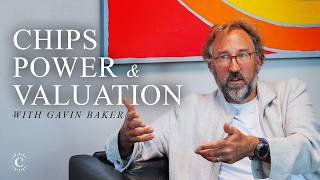
Baker: AI bubble is expected but fundamentally different from dot-com
Gavin Baker
“Historical precedent from the past 200 years shows that foundational technologies (railroads, canals, internet) consistently generate market bubbles that fund infrastructure buildout before supply exceeds demand and crashes occur. The current AI buildout should be expected to follow this pattern, but differs from the year 2000 dot-com bubble in crucial ways: it's funded from operating cash flows rather than debt, valuations are more reasonable, and GPU utilization is at 100% versus the 99% unutilized fiber capacity of the internet era.”
Key Moments

Finck: South Sea Bubble involved leverage, debt conversion, and smart money exits
Clay Finck
“The South Sea Company inflated its bubble by providing loans to investors and converting government debt to shares, reducing available supply while enabling speculative purchases. Notable investors like Isaac Newton and Richard Cantillon sold their shares early, recognizing the unsustainability. The departure of experienced investors can signal that a bubble's peak is approaching, even though timing the exact collapse remains impossible.”
Carlson: Bear market rallies create false hope and confusion
Ben Carlson
“Bear markets are characterized by countertrend rallies ("dead cat bounces") that suck investors back in with false hope, making it impossible to distinguish in real-time whether a rally is genuine recovery or just another false start. Recent investors haven't experienced prolonged bear markets since 2008, as the 2022 bear market was relatively mild and short-lived, lasting only about a year with a 25% decline. Studying market history is essential because gaining experiential wisdom takes years, and no single investor will live through all possible market conditions.”
Jones: Multiple overlapping bubbles create unprecedented systemic risk
Paul Tudor Jones
“The U.S. faces simultaneous bubbles in sovereign debt, equities (at 252% of GDP vs. historical 90%), and illiquid assets like private equity (doubled from 7% to 16% of institutional portfolios since 2008). This combination creates extreme vulnerability: a mean-reversion stock decline of 30-35% would trigger cascading effects through wealth destruction, collapsing tax revenues, exploding deficits, and bond market stress, all while portfolios are far less liquid than in 2008.”
Powered by Symmerai — a living index of public discourse. Request early access →
Related concepts
Other relevant clips
History's Biggest Market Bubbles w/ Clay Finck (TIP784)
Clay Finck
“…a bubble, the railway mania of 1845, and the Japanese stock market and property bubble of 1989. They say that history doesn't repeat itself, but it often rhymes. And that is the theme that plays right into all three of these bubbles. Each displayed unprecedent”
History's Biggest Market Bubbles w/ Clay Finck (TIP784)
Clay Finck
“speculative market environment. Only four of the 190 bubble companies ended up being legitimate enterprises with a real underlying business underneath. The rest just wanted to prey on investors' greed. But these bubble companies didn't necessarily take away th”
The Four Horsemen Of The Stock Market Bubbles: Owen Lamont Reveals Them
Owen Lamont
“…here but given the romping and stomping going on in equity markets we've been talking a lot about just how much US Stocks have compounded over the past 15 years it's really been a wonderful period we did a post on Twitter asking investors what they thought US”
A Storm May Be Coming To Wall Street (Bob Elliott Breaks It Down For Investors)
Bob Elliott
“…t's going to separate. This is the moment where you know uh markets are not going to fall back to earth from a narrative perspective and so that creates very elevated expectations just at a time when you know usually some combination of Fed tightening or maybe”
Morgan Housel's Lessons on How to Get Rich, Stay Rich, and Build Wealth w/ Clay Finck (TIP657)
Clay Finck
“…u know we can never get rid of them once we understand that market Cycles are directly tied to our innate human behavior we can be more equipped to deal with these cycles that inevitably play out housel shared a theory from Carl Jang which was the idea that an”
The AI Bubble Might Be Exactly What We Need (William Goetzmann Explains)
Will Goetzmann
“…ppen? And they happen in modern times at least in financial markets because people are trading on beliefs and expectations. You can actually trade buy and sell securities based on your analysis of what the future might bring and what you think other people thi”
A History of Stock Market Bubbles w/ Legend Investor Jeremy Grantham (TIP650)
Legend Investor Jeremy
“was the market doing that it not only couldn't see trouble coming but it apparently saw heaven coming it could not possibly have been more wrong so you fast forward to Japan which is in a way the mother and father of all bubbles Japanese Market had never sold”
Surviving the AI Bubble: Timeless Lessons for Investors w/ Kyle Grieve (TIP823)
Kyle Grieve
“…foolish investment to me, doesn't it? This happens when the market refuses to price what an asset is worth. It prices it what people hope that it will become. A bubble is kind of a form of time distortion. Investors take all potential growth, future cash flow,”