Hedge Funds & Active Management
Whether active managers earn their fees. Fran Kinniry sees no sign markets are getting less efficient, Rob Arnott argues passive indexation creates opportunity, Dan Rasmussen defends active management in biotech's dispersion, and Clay Finck recounts Vanguard forgoing $90bn in revenue.
Viewpoints
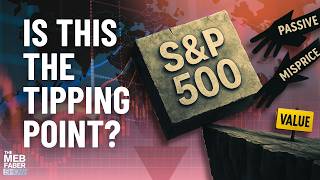
Arnott: Market inefficiency creates opportunities despite Sharp's arithmetic
Rob Arnott
“The combination of retail investors lacking institutional-level information and the growth of passive indexation makes markets less efficient, potentially creating handsome opportunities for active investing in the future. However, Sharp's arithmetic of active management presents a cautionary counterpoint: since active managers collectively own the same portfolio as the market minus index funds, they must underperform after accounting for higher trading costs and fees.”
Kinniry: Active management getting harder as weak players exit
Fran Kinniry
“Markets show no signs of becoming less efficient, and it's getting progressively harder for active managers to beat the market. The increasing difficulty may reflect a tournament-like dynamic where weaker active managers are gradually forced out, leaving only the strongest competitors. This consolidation toward a small number of skilled players doesn't indicate inefficiency—rather, it demonstrates the market's continued efficiency as novices can't compete.”
Rasmussen: Biotech's extreme dispersion justifies active management alpha
Dan Rasmussen
“Biotech exhibits extreme dispersion across companies and a fat right tail distribution, which justifies active management and alpha generation in this sector. There is no viable passive investment approach for these companies, making biotech one of the last bastions where stock selection skill is essential. Academic evidence and the consistent performance of long- surviving biotech hedge funds demonstrate that real alpha can be generated through active management in this space.”
Finck: Vanguard's passive strategy disrupted active management through structural advantages
Clay Finck
“Vanguard's shift to passive, low-cost index funds represented a fundamental disruption of the active management industry, forgoing an estimated $90 billion in potential revenue by charging expense ratios as low as 0.03% instead of typical 1% active management fees. Incumbents faced an innovator's dilemma—their business models were built on collecting active management fees, making them unable to disrupt themselves by launching competing low-cost passive products. This allowed Vanguard to gain unstoppable momentum as capital flowed from active to passive strategies, particularly since consistently outperforming active managers are extremely difficult to identify.”

Giffon: Professional constraints make active management harder than for individual investors
Jeremy Giffon
“Warren Buffett's advice to put money in the S&P 500 is directed at average investors, not professional active managers. Professional money managers face unique structural challenges that make beating the market particularly difficult - including business mandates, customer satisfaction requirements, and other institutional constraints that individual investors don't have. This creates a paradox where professionals with the best resources and incentives struggle more than individuals might in theory.”
Key Moments
Sacerdote: Endowments systematically underweight large-cap tech due to alpha beliefs
Alex Sacerdote
“Institutional investors like endowments have been massively underweight in large technology companies because of a structural bias against large-cap stocks, stemming from the belief that large-cap investing offers no alpha opportunities. This underweighting persists despite the reality that digital economy leaders naturally grow to massive scale with strong competitive advantages and global reach, creating substantial profit pools that these investors are effectively betting against.”
Powered by Symmerai — a living index of public discourse. Request early access →
Related concepts
Other relevant clips

A Unicorn In Asset Management: How Does DUNN Capital Charge $0 Fees?
Marty Bergin
“always hear about hedge funds that charge a man mement fee and an incentive fee a lot of them have gotten rid of the incentive fee because of the negative connotation of taking that much money on top of a management fee well we did the opposite we got rid of t”
The Collapse of Long-Term Capital Management | When Genius Failed w/ Clay Finck (TIP707)
Clay Finck
“…stein explained that such entities simply did not invest in hedge funds, but the Italian agency thought of Long-Term not as a hedge fund per se, but an elite investing organization with a quote unquote solid reputation. Long-term also secured commitments from”
Why Rich Investors NEVER Sell Their Biggest Winners
Wes Gray
“…, of course, Wes has a link in there. He had a piece called Hedge Fund Hurt Locker. And Mark Kritzman, who has historically done a ton of this from Windham Capital, were looking at hedge fund mutual fund returns and just how much returns you have to get to get”
The Collapse of Long-Term Capital Management | When Genius Failed w/ Clay Finck (TIP707)
Clay Finck
“…edible rise and catastrophic fall of one of the most famous hedge funds in history. Founded by Wall Street's brightest minds, including Nobel Prize-winning economists, long-term capital management seemed invincible until it wasn't. Using complex mathematical m”
Investment Strategies of the Superrich w/ Adam Shapiro (RWH048)
Adam Shapiro
“…ate investing in an absolute return and um you know our our hedge fund positions you know the the betas you know the relationship to the S&P 500 they range you know from a high of about 0.5 or6 some of them down to”

Webinar Replay: Endowment Style Investing and 351 ETF Conversions | Meb Faber
Meb Faber
“…jaws right everyone's moving ETFs you see people picking up hedge funds moving the ETFs people picking up Asset Management business separate accounts moving the ETFs and so all of these are done in a tax efficient tax-free manner you're not wiping the taxes Yo”
Investment Strategies of the Superrich w/ Adam Shapiro (RWH048)
Adam Shapiro
“…nt stuff private Equity all the liquidity that goes with it hedge funds that charge big fees all all this stuff why should I bother with any of that shouldn't I just buy ETF look at what the S&P 500 has done for the last 10 years 15 years pick your number and”
Why Wall Street Keeps Making The Same Mistake (From 1792 to Today)
Mark J. Higgins
“…ees that remind me. I remember writing about the closed end funds in the 1930s and they would charge, you know, like a a big load of 2 and a half 3% and then an annual fee of 1 one and a half% oh and it would be like 6 or 7%. Like you're actually starting to s”