Gut Microbiome and Health
Gut microbiome diversity and composition influence inflammation, immune function, mental health, and metabolic health through the gut-brain axis. Fiber fermentation produces short-chain fatty acids (especially butyrate) that support the gut barrier and reduce inflammation. Fermented foods often outperform probiotic supplements for diversity. Antibiotic overuse and Western diet drive dysbiosis.
Viewpoints

Attia: butyrate as the microbiome's key metabolic output from dietary fiber
Peter Attia
“The gut microbiome metabolizes dietary fibers — which humans cannot digest themselves — through a network of primary and secondary fermenters that produce short-chain fatty acids, ultimately yielding butyrate. Butyrate is one of the most important molecules the microbiome produces, serving as the primary energy source for colonocytes and playing a broad role in GI health and beyond. This framing reorients carbohydrate metabolism away from the classical glucose-centric view toward a fiber-fermentation model unique to the microbial ecosystem.”

Rhonda Patrick: The gut-brain axis links microbiome health to neurotransmitter production and behavior
Rhonda Patrick
“The gut microbiome, comprising over 100 trillion microorganisms, functions as an organ that communicates with the brain via the immune system, enteric nervous system, neuroendocrine system, vagus nerve, and circulatory system. Gut bacteria such as Lactobacillus and Enterococcus produce neurotransmitters like GABA and serotonin, meaning neurochemical signaling is not confined to the brain. Disruptions to this gut-brain axis can influence mood, cognition, anxiety, and pain, and maintaining a healthy microbiome may be relevant to preventing or treating conditions like alcohol use disorder.”

Huberman: fermented foods and fiber as gut microbiome enhancers
Andrew Huberman
“Regular consumption of prebiotic fiber from fruits, vegetables, and grains, combined with low-sugar fermented foods such as kimchi, sauerkraut, and refrigerated pickles, powerfully supports gut microbiome health. A healthy gut microbiome reduces systemic inflammation throughout the body, which is visibly reflected in skin health and appearance. Importantly, fermented foods must be unpasteurized and refrigerated to retain their microbiome-supporting properties.”
Key Moments
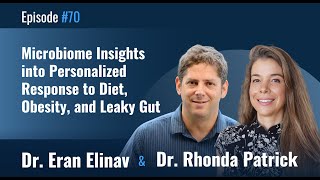
Rhonda Patrick: genetic susceptibility, leaky gut, and the prebiotic-probiotic-postbiotic distinction
Rhonda Patrick
“Genetic susceptibility combined with dietary components—such as gliadin in gluten triggering immune reactivity in celiac patients—can cause intestinal permeability (leaky gut) and downstream disease. This 'two-hit' model likely extends to complex multifactorial diseases like heart disease and cancer, where both host genetics and microbial or food components converge. Dietary insufficiencies, particularly lack of fermentable fiber, may also drive gut dysfunction, framing the distinction between prebiotics, probiotics, and postbiotics as central to understanding gut microbiome health.”
Attia: defining probiotics, prebiotics, postbiotics, and synbiotics
Peter Attia
“The gut microbiome consists of living bacterial and yeast organisms (probiotics), which are fed by dietary fibers, inulin, and polyphenols (prebiotics). The metabolic byproducts these organisms secrete are called postbiotics, and when two or more of these components are combined, the formulation is termed a synbiotic.”

Huberman: gut microbiome, tryptophan, and serotonin production
Andrew Huberman
“Fermented foods and probiotic supplementation can improve gut microbiota composition, which in turn supports serotonin production by increasing availability of its precursor tryptophan. Because roughly 90% of the body's serotonin is produced in the gut and communicated to the brain via the vagus nerve, optimizing gut health through diet and targeted supplementation (including probiotics, magnesium orotate, and CoQ10) has measurable effects on mood. Clinical trial data supports this gut-brain axis mechanism linking microbiome health to neurochemical outcomes.”
Rhonda Patrick: gut microbiome shapes immune regulation through short-chain fatty acids and flavonoid metabolism
Rhonda Patrick
“Fermentable fiber feeds gut bacteria that produce short-chain fatty acids (butyrate, acetate, propionate, lactate), which maintain gut barrier integrity and promote the expansion of T-regulatory cells that suppress autoimmunity and help resolve acute respiratory distress. Separately, gut bacteria metabolize dietary flavonoids into compounds like diaminotetrazole (DAT), which stimulates interferon production and protects against severe viral infections such as influenza. Reduced T-regulatory cell numbers, potentially linked to poor microbiome function, are associated with worse COVID-19 outcomes.”
Rhonda Patrick: overview of microbiome intervention strategies from prebiotics to postbiotics
Rhonda Patrick
“Microbiome interventions can be categorized as prebiotics (dietary fibers to improve microbial composition), probiotics (exogenous microbes), postbiotics (direct supplementation of beneficial metabolites), and more advanced approaches like fecal microbiome transplantation and phage therapy. Postbiotic therapy offers a compelling strategy by bypassing the highly variable microbial ecosystem entirely, directly supplying missing bioactive metabolites in disease contexts. However, probiotics show significant inter-individual variability in efficacy, suggesting personalized, data-driven approaches are needed.”
Attia: defining probiotics, prebiotics, postbiotics, and synbiotics
Peter Attia
“The microbiome consists of living bacterial and yeast organisms (probiotics), which are fed by dietary fibers, inulin, and polyphenols (prebiotics). What these organisms secrete or produce are called postbiotics, and when two or more of these components are combined in a product, it is termed a synbiotic. This terminology provides a foundational framework for understanding how dietary inputs interact with gut microbial communities.”
Attia: microbiome as readout vs. cause of metabolic health
Peter Attia
“Metabolic health can exist across wildly different dietary patterns—from high-fiber plant-based diets to zero-fiber carnivore diets—raising the question of whether the microbiome drives metabolic health or merely reflects it. The ideal experiment would track microbiome composition across serial diet changes in the same individual to determine causality. It's possible that host-intrinsic factors play a larger role than diet in shaping microbiome composition, meaning certain microbial strains may remain stable regardless of what a person eats.”
Elinav & Patrick: gut barrier integrity is shaped by microbes, diet, and individual variation
Rhonda Patrick
“The intestinal barrier—comprising tight junctions between epithelial cells and an overlying mucus layer—is regulated by both microbial signals and environmental factors including food components, medications, and toxins. When this regulation is disrupted, leaky gut can occur, allowing bacteria and food molecules to contact human cells. The degree to which specific dietary components (such as high sugar combined with saturated fat) affect gut permeability appears increasingly personalized, with conditions like celiac disease illustrating how certain individuals respond dramatically to specific food proteins while others do not.”
Attia: antibiotic-driven microbiome reset as a dietary intervention window
Peter Attia
“Antibiotics effectively wipe the microbiome slate clean, and the foods consumed during recovery largely determine the composition of the new microbial ecosystem. Children repeatedly exposed to antibiotics show higher rates of obesity, type 2 diabetes, ADHD, and celiac disease, suggesting the developing microbiome is particularly vulnerable to disruption. The post-antibiotic period represents an underutilized opportunity to improve diet and seed a healthier microbiome, potentially augmented by probiotics or fecal microbiome transplant at the tail end of the antibiotic course.”
Rhonda Patrick: Gut microbiome regulates immune cells via short-chain fatty acids
Rhonda Patrick
“Fermentable fiber consumed in the diet is broken down by gut bacteria into short-chain fatty acids like butyrate, acetate, and propionate, which maintain gut barrier integrity and regulate immune cell populations—including promoting the expansion of T-regulatory cells that suppress autoimmunity and help resolve acute respiratory distress. Gut bacteria also metabolize dietary flavonoids to produce compounds like diaminotetrazole (DAT), which stimulates interferon production and protects against severe viral infections such as influenza.”

Rhonda Patrick: Antibiotic overuse harms the gut microbiome and strategies to mitigate damage
Rhonda Patrick
“Antibiotic overuse carries a dual cost: it promotes drug- resistant pathogens and damages beneficial resident gut microbes. Environmental microbial exposure—such as having pets—can partially offset antibiotic-related microbiome disruption in children. When antibiotics are genuinely necessary, proactive strategies to repopulate the gut microbiome are important for mitigating long-term harm.”
Elinav: Probiotic colonization success depends on individual microbiome composition
Rhonda Patrick
“Research on 11 commonly used over-the-counter probiotics found that in approximately half of tested individuals, the indigenous gut microbiome is hostile to incoming probiotic bacteria, preventing them from colonizing the gut even temporarily. This inter-individual variability in the baseline microbiome is a major determinant of whether probiotics produce any meaningful health effect. The finding suggests that probiotic supplementation is not universally beneficial and that personalized microbiome profiling may be necessary to predict who will respond.”
Rhonda Patrick: Early-life gut microbiome shaping and parental considerations
Rhonda Patrick
“The gut microbiome stabilizes by around age three, making the first years of life a critical window for shaping long-term microbial composition. Factors such as breastfeeding—which provides human milk oligosaccharides—diet, and antibiotic exposure during this period can significantly influence microbiome development. Whether reduced microbial diversity is itself a driver of disease or merely reflects the dominance of pathogenic microbes remains an open scientific question.”
Huberman: fermented foods and fiber as gut microbiome enhancers
Andrew Huberman
“Regular consumption of low-sugar fermented foods — such as refrigerated kimchi, sauerkraut, and pickles — along with adequate dietary fiber from fruits, vegetables, and grains, powerfully supports gut microbiome health. A healthy gut microbiome reduces systemic inflammation throughout the body, which is reflected in measurable improvements in skin health and appearance. The key distinction for fermented foods is that they must require refrigeration, as shelf-stable versions lack the live cultures needed to confer these benefits.”
Powered by Symmerai — a living index of public discourse. Request early access →
Related concepts
Other relevant clips
Dr. Eran Elinav on Microbiome Insights into Personalized Response to Diet, Obesity, and Leaky Gut
Rhonda Patrick
“…f that about compounds that are produced by bacteria in our gut that are not beneficial and what role, for example, like leaky gut or, you know, what would be more technically intestinal permeability, some compounds that can be, you know, produced or this conc”
283 ‒ Gut health & the microbiome: improving and maintaining the microbiome, probiotics, & more
Peter Attia
“…n or the the fraction in which one microbe might be in your gut today might be different tomorrow and so you you need longitudinal data that get you the quantitative piece plus you know who are the players um and so and then the third part is because they're a”
283 ‒ Gut health & the microbiome: improving and maintaining the microbiome, probiotics, & more
Peter Attia
“…s in the microbiome so it also plays a role in sort of this gut metabolism axis um and so berate becomes this really important small molecule that the gut is producing based on the foods that you're eating um and and that's kind of where we've really honed in”

Dr. Michael Snyder on Continuous Glucose Monitoring and Deep Profiling for Personalized Medicine
Rhonda Patrick
“…ere people can give a little sample and see what's in their gut basically? [Dr. Snyder]: Right, right. So the answer is yes. Microbiome, it's one of these things everybody knows is super, super important. But the actual showing something with clinical value ha”

How to Improve Your Teeth & Oral Microbiome for Brain & Body Health | Dr. Staci Whitman
Andrew Huberman
“…uh not seeds olives pickles I love fermented foods for for gut health and then oral microbiome support too so essentially a whole food diet you know things that come from the earth and Le more from farms and less from factories things out of bags um arguably”
How to Improve Your Teeth & Oral Microbiome for Brain & Body Health | Dr. Staci Whitman
Andrew Huberman
“…just remarkable and I have a family member who has some um gut issues like just digestion issues and it's unclear what's going on there and um I'm inspired to try and help them address that through the oral microbiome by switching to hydroxy appetite and and”

How to Improve & Protect Your Skin Health & Appearance | Dr. Teo Soleymani
Andrew Huberman
“…ut of my colleagues Labs up at Stanford that modulating the gut microbiome affects inflammatory conditions of the skin meaning if you control the disregulation of the gut microbiome if you have an anti-inflammatory dietary habit actual skin disease decreases i”
Transform Your Metabolic Health & Longevity by Knowing Your Unique Biology | Dr. Michael Snyder
Andrew Huberman
“…is just going to continue. >> I totally agree. I think the gut microbiome is without question one of the more fascinating aspects of our biology and um in no small part because of the way that it interacts with the brain by the vagus nerve. You know, everyone”