Disruption & Innovation
Why incumbents miss the thing that displaces them. Clay Finck notes paradigm shifts look fragile before they look inevitable, Rob Arnott argues firms must disrupt their own most profitable lines as Palm failed to, and Joe Davis shows non-tech companies gain most in the second phase.
Viewpoints
Finck: Paradigm shifts succeed through generational replacement, not persuasion
Clay Finck
“Paradigm shifts in business and investing are rarely embraced by incumbents or the majority of investors initially because new innovations appear fragile and impractical before achieving scale. The largest investment payoffs come to those who recognize seismic shifts early, as illustrated by historical examples like commercial aviation and Tesla, where skeptics focused on surface-level challenges while missing the fundamental transformation occurring.”

Ben Gilbert & David Rosenthal: UGC platforms may benefit most from AI asset generation
Ben Gilbert & David Rosenthal
“User-generated content platforms like Fortnite Creative, Core, and Roblox may capture the most value from AI asset generation because they enable users to create 3D assets directly, avoiding the institutional resistance that traditional game studios face when their artists push back against AI use. This represents a potential innovator's dilemma scenario where incumbent studios struggle with AI adoption due to internal tensions, while UGC platforms can more naturally integrate these capabilities.”

Davis: General purpose technologies create value in second-wave adoption
Joe Davis
“Transformational technologies follow a two-phase pattern: initially, the technology companies themselves outperform, but in the second phase, non-tech companies outperform as they adopt and benefit from the innovation. For a technology to truly qualify as transformational or general-purpose, it must demonstrably improve productivity and efficiency across diverse sectors like hospitals, banks, and asset management—otherwise it's merely a consumer phenomenon like social media that doesn't drive broader economic growth.”

Arnott: Self-disruption as essential corporate strategy despite short-term costs
Rob Arnott
“Successful companies in innovative markets must be willing to disrupt their own most profitable business lines before competitors do so, as illustrated by Palm's destruction by Blackberry and Blackberry's subsequent obliteration by Apple. This requires management to sacrifice short-term profitability and quarterly earnings expectations for long-term survival, creating an inherent tension between immediate financial pressures and strategic necessity. The willingness to self- disrupt represents a critical management skill that distinguishes companies that survive technological disruption from those that fail.”
Key Moments
Finck: Zero-to-one vs horizontal progress
Clay Finck
“Progress takes two fundamental forms: horizontal progress (copying what works, like building 100 typewriters from one) and vertical progress (creating something new, like inventing a word processor from a typewriter). Vertical or 'zero-to-one' innovation is harder to imagine because it requires doing something nobody has done before, and there is no formula for creating these breakthroughs - each innovation is unique.”

Schultz: Disruptive innovation requires guardrails to protect core business
Howard Schultz
“When disrupting a market by transforming a commodity into a premium brand experience, there must be some governor or constraint on the disruptive innovation. Without proper controls, innovative offshoots risk cannibalizing or undermining the core business model, even when that core generates extraordinary value (as illustrated by Starbucks' gift card float functioning like a top-tier bank).”
Powered by Symmerai — a living index of public discourse. Request early access →
Related concepts
Other relevant clips
Tesla Stock Deep Dive | Elon Musk's Vision to Build the Future (TIP761)
Clay Finck
“…evaluate them using traditional metrics and frameworks, but disruption does not play by traditional rules. That gap between perception and reality creates a long runway of doubt before people begin to see what's really happening. And once it's finally obvious”
How to Find the Stock Market's Biggest Winners w/ David Gardner | Rule Breaker Investing (TIP754)
David Gardner
“…ruptive innovation, at least that phrase as he talked about disruption. The key is that it often happens because big companies, you think that they're amazing and untouchable and we need to break them up because they're too big and too successful. But actually”

Legendary Investor Dan Loeb on AI, Credit, & Third Point’s $25B Strategy
Dan Loeb
“…to think that this increase in technological innovation and disruption and change that we've been experiencing for the last couple years is an anomaly and that things are going to go back to a kind of a steadier type of innovation and growth. Hold on to your s”
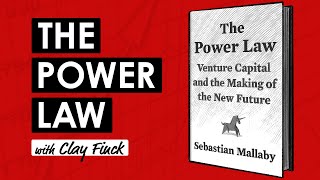
The Power Law: Unlocking Venture Capital's Secrets w/ Clay Finck (TIP693)
Clay Finck
“…h established business models but we now live in the age of disruption businesses that we thought were totally indestructible are now seeing new businesses launched overnight start to compete with them understanding power laws can help us better understand tha”

Legendary Trader Paul Tudor Jones on AI Risk, Bubbles and Buffett
Paul Tudor Jones
“…the safety side, not even what's going to happen to social disruption. Matt Schumer came out with a very lengthy essay on how the two new models that were released six days ago >> are going to be so unbelievably d disruptive to the workforce. So you just the”

How AI Is Changing Warfare | Palantir CTO
Shyam Sankar
“…olding that up, it's like it is the perpetual motor of self-disruption. I think about it is like the most valuable thing is not to defend a moat or something, but it's to go charge after the new opportunity. Um and one of the things I think is unique about AI”
How Jens Grede Hacked Pop Culture to Build a Billion-Dollar Brand
Jens Grede
“…o make and supply trends at an even lower price. technology disruption in supply chain uh distribution those things is what makes brands happen you know and with skims it was a combination of a few things. So one I saw this very large part in retail um in in u”
Amazon’s Secret Weapon: Customer Obsession (TIP716)
Kyle Grieve
“…d music. These were all areas that were very, very ripe for disruption by moving towards digital. Jeff and Amazon knew that building the Kindle to what Jeff wanted would end up cannibalizing part of their book business. But I guess the assumption was that they”